

Quick Summary
Square POS charges a flat fee per transaction, which can add up for high-volume sellers. You also have to use Square’s payment processing. This is why we looked at some of the best Square POS alternatives, including Osprey, Clover, and Toast, that give you more flexibility. We also highlight options for retail, restaurants, and multi-store businesses that want to save money and grow over time.
Our top three picks
# | POS System | Best For |
1 | Osprey POS | Independent retailers that want local, in-person service |
2 | Order Counter | Restaurants that want local, in-person service |
3 | Clover | Customizing through an app marketplace |
Why Switch From Square POS in the First Place?
Square helps you sell fast, which is why so many small businesses start there. The free plan and quick setup are hard to beat on day one.
The trouble shows up later. Square’s per-transaction fees can cost busy stores more than those from a processor they choose themselves. You’re locked into Square’s processing, and phone support is only available on the top plan.
Once you add locations or need real inventory and reporting, Square starts to strain. Below, we compare 8 alternatives on processing costs, inventory depth, industry fit, and support.
Why Listen to Us
Business Machines Company (bmc) has sold and supported POS systems for independent retailers since 1958. That’s 65+ years across grocery, thrift, liquor, convenience stores, and restaurants, through every shift from mechanical registers to cloud software. We’ve helped many owners move off systems that no longer fit, and that experience shapes this comparison.
8 Best Square POS Alternatives
A side-by-side look at each square POS alternative, highlighting their main strengths and starting prices, before we get into the details.
# | POS System | Best For | Starting Price |
1 | Osprey POS | Independent retailers that want local, in-person service | Custom quote |
2 | Order Counter | Restaurants and bars that want local, in-person service | Custom quote |
3 | Clover | Adding features through an app marketplace | Processing from 2.3% + 10¢; software by quote |
4 | Lightspeed Retail | Growing retailers that need deep inventory tools | $89/month (billed yearly) |
5 | Toast | Restaurants and high-volume food service | $0/month restaurant; $90/month retail |
6 | Shopify POS | Sellers who want a strong online and in-store sync | $25/month (billed yearly) |
7 | KORONA POS | High-volume stores that need inventory analytics | $59/month |
8 | SkyTab | Restaurants that want low upfront hardware cost | $0 upfront, $29.99/month |
1. Osprey POS
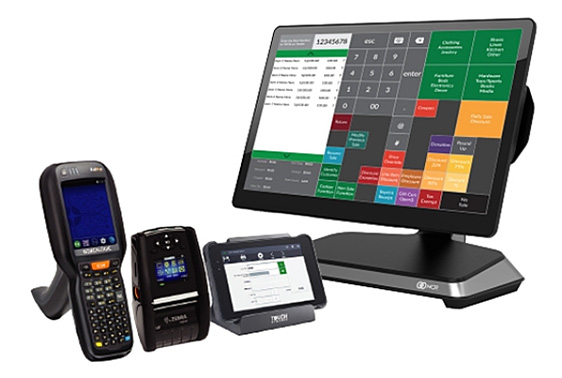
Osprey POS is a point-of-sale platform built for independent retailers in grocery, thrift, liquor, and convenience stores. Unlike Square, which is self-serve and requires you to set it up on your own, Osprey is installed and supported by bmc: a technician handles installation, trains your staff, and provides in-person support throughout Michigan, Ohio, Kentucky, and Indiana.
This hands-on approach is ideal for owners who prefer not to troubleshoot their POS system. Osprey runs on certified hardware and platform options (including NCR and PAR), configured to how your specific business operates instead of a one-size-fits-all template.
Osprey also handles back-office needs that many Square users eventually outgrow, like managing inventory across multiple stores, enterprise-level reporting, compliance for age-restricted sales, and loss prevention. For chains that need more than a basic terminal, these features make a real difference.
Key features
- Local installation and training: A bmc technician sets up the system on-site and trains your team in person.
- Vertical-specific configuration: Built for grocery, thrift, liquor, and c-store workflows, not a generic retail template.
- Multi-store inventory and reporting: Track stock and pull enterprise reports across every location from one place.
- Age-verification and compliance tools: Handle age-restricted sales with built-in ID checks and compliance support.
- Loss prevention controls: Flag voids, returns, and unusual activity to protect margins across stores.
- Bring-your-own processor payments: Choose your payment processor with P2PE-secured, PCI-compliant processing.
- eCommerce integrations: Connect DoorDash, Uber Eats, and Instacart to your store from one system.
Pricing
Pricing is available by custom quote. You can request a demo from bmc to get a price tailored to your number of stores and specific needs.
Pros
- Local install, training, and in-person service from bmc.
- Built for specific retail verticals, not generic use.
- Multi-store inventory and enterprise reporting included.
- Choose your own payment processor.
- Strong compliance tools for age-restricted sales.
Con
- Pricing and service reach require contacting bmc directly.
2. Order Counter
Order Counter is a cloud-hybrid POS built for restaurants, bars, and quick-service spots. Like Osprey, it comes with bmc’s hands-on service: a technician installs the system on-site, trains your staff, and provides in-person restaurant and hospitality POS support throughout Michigan, Ohio, Kentucky, and Indiana.
Where Square runs entirely in the cloud, Order Counter pairs an in-house server with cloud access. Your team keeps taking orders and payments when the internet drops, and you still manage menus, staff, and reports from any device.
It also fixes the gaps restaurants hit on Square, with kitchen displays that pace multi-course service, handheld tableside ordering, and online ordering from your own site instead of commission-heavy delivery apps.
Key features
- Local installation and training: A bmc technician sets up the system on-site and trains your team in person.
- Hybrid cloud reliability: An in-house server keeps orders and payments running through internet outages, with cloud access from anywhere.
- Kitchen display and coursing: Route tickets to prep stations and pace multi-course service for full-service dining.
- Commission-free online ordering: Take orders from your own site instead of paying 25 to 35% commissions to third-party apps.
- Tableside ordering with OrderTab: Servers take orders and payments at the table from a handheld device.
- Self-serve kiosks and gift cards: Add self-ordering kiosks and sell gift cards from the same system.
- Remote back office: Manage menus, inventory, employees, and multi-location reporting from any device.
Pricing
Pricing is available by custom quote. You can request a demo from bmc to get a price tailored to your restaurant and locations.
Pros
- Local install, training, and in-person service from bmc.
- Hybrid setup keeps service running through outages.
- Commission-free online ordering protects margins.
- Fits full-service, QSR, bars, and delivery operations.
Cons
- Built for restaurants, not general retail.
- Pricing requires contacting bmc directly.
3. Clover POS
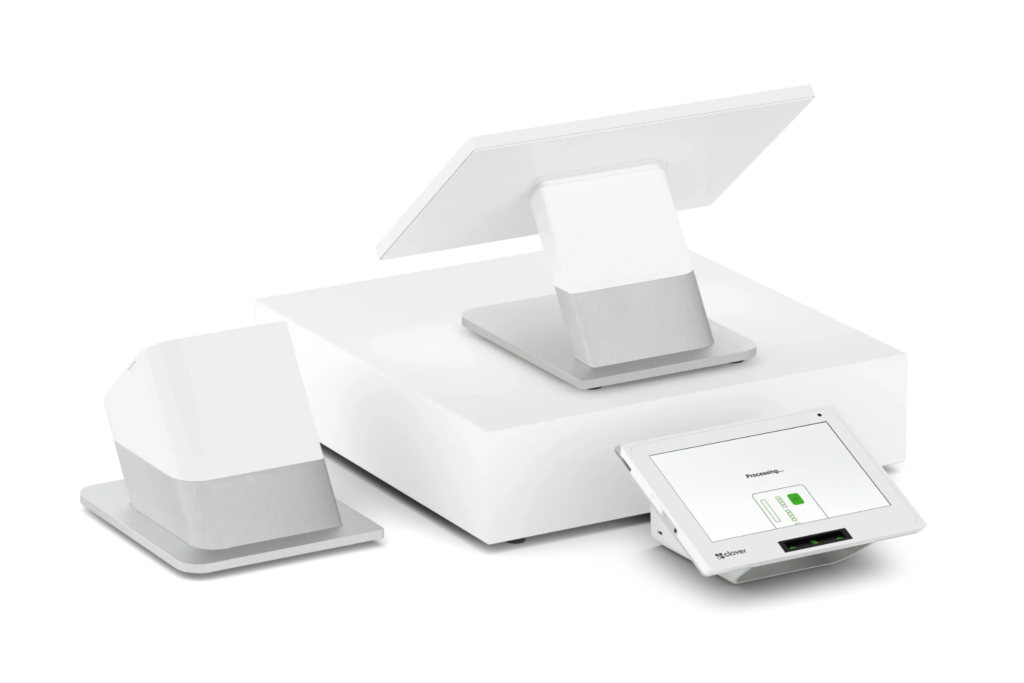
Clover is a cloud-based POS system that uses its own hardware and offers a wide app marketplace. It’s a good fit for retail, restaurant, and service businesses that want to add features with apps as they grow. Like Square, Clover includes payment processing, but it operates through its parent company, Fiserv.
Key features
- App market: Add features like Yelp, Homebase, MailChimp, and QuickBooks from Clover’s app store.
- Own hardware range: Pick from Go, Flex, Mini, Station, or Kiosk devices to fit your counter.
- Built-in loyalty and marketing: Run a loyalty program and send promos by email, text, or app.
- Real-time reporting: Track sales, refunds, and deposits in real time through the Clover dashboard.
- Virtual terminal: Take payments from a computer or phone without a POS device.
Pricing
Processing from 2.3% + 10¢ per transaction.
Software plans and hardware options depend on your business type and require a quote. New merchants should know that hardware promotions often come with a 3-year contract.
Pros
- Wide range of hardware for different counter setups.
- Built-in loyalty and marketing tools included.
- Consistent card rates, including AMEX.
Cons
- Hardware promos can require a 3-year contract.
- App-based customizing adds monthly costs over time.
- Full software pricing needs a sales quote.
4. Lightspeed Retail
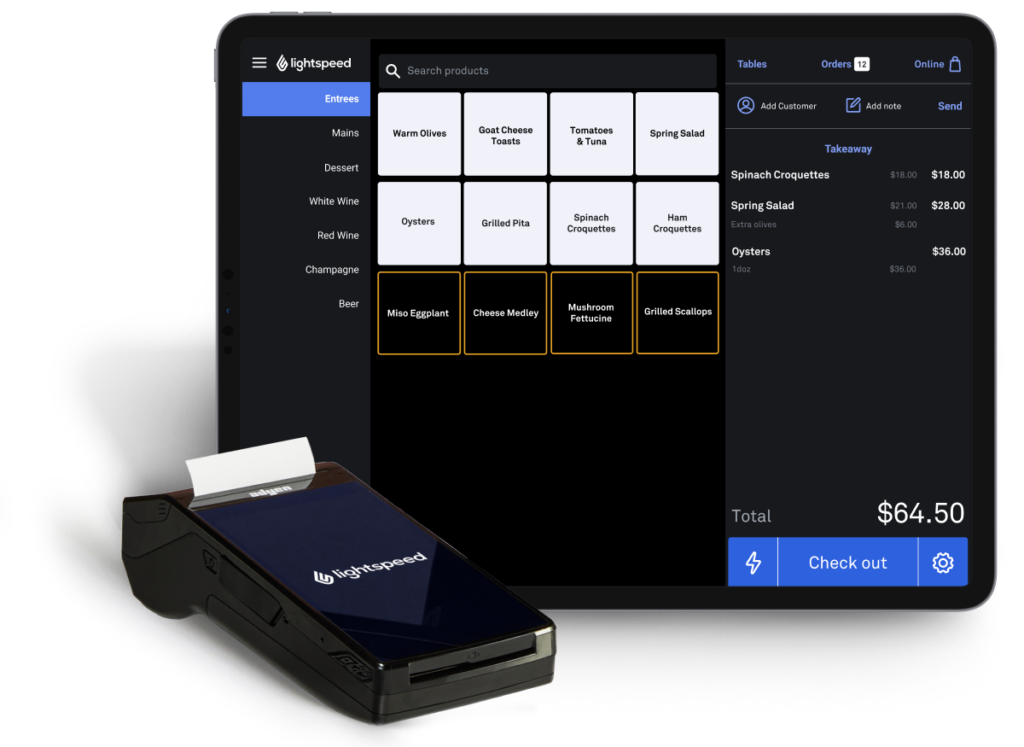
Lightspeed Retail is a cloud-based POS designed for advanced inventory and multi-store management. It’s a good choice for growing retailers who need more than Square’s basic inventory tools. You can move stock between locations, sell on marketplaces like eBay and Amazon, and access detailed reports from anywhere.
Key features
- Multi-location stock transfers: Move inventory between stores while maintaining consistent pricing across all locations.
- Marketplace selling: List items on Amazon, eBay, Walmart, and Google Shopping from one system.
- Scheduled reporting: Automate reports on products, staff, and customers, viewable through the cloud.
- Loyalty and marketing: Run points-based rewards and reach customers by SMS and email.
- Built-in payments: Process cards, debit, and mobile payments with PCI-compliant security.
Pricing
Billed annually: Basic $89/month, Core $149/month, Plus $289/month.
Each plan includes one register.
Pros
- Strong inventory tools for growing retailers.
- Cloud access keeps running off-site.
- Detailed, schedulable reporting across stores.
Cons
- Setting up and customizing Lightspeed Retail can require some technical know-how.
- Extra registers and locations raise cost.
- Pricing requires contacting sales.
5. Toast POS
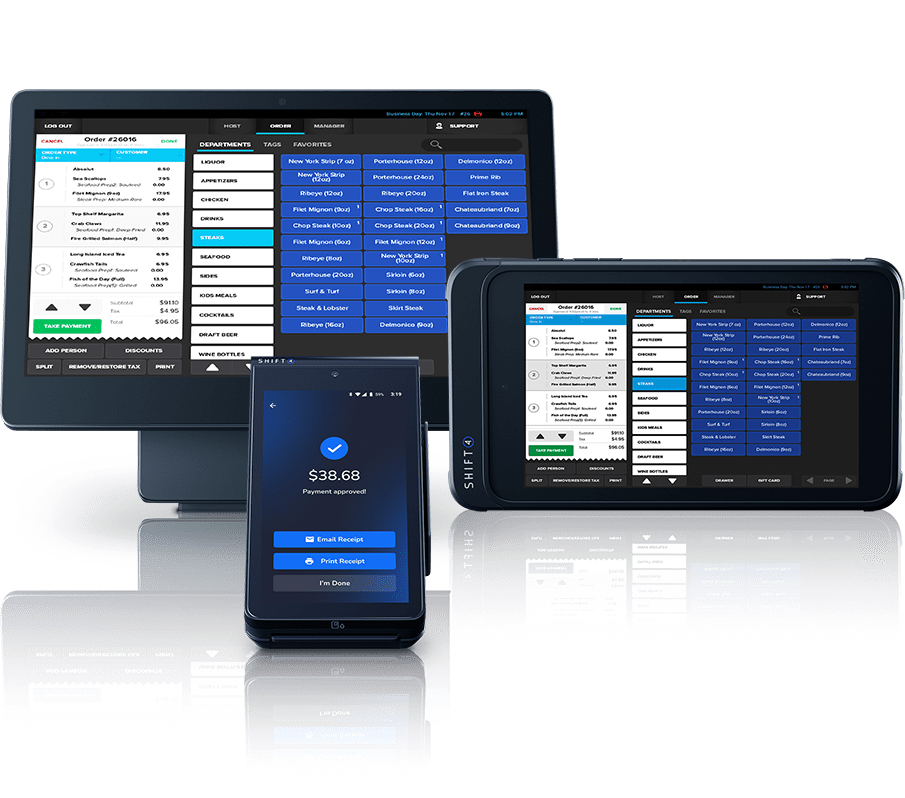
Toast is a POS system designed for restaurants, with growing retail support. It suits food-service businesses that find Square too generic for high-volume service. Toast provides restaurant-grade hardware, kitchen display systems, and offline mode, and integrates with delivery apps like DoorDash and Uber Eats.
Key features
- Kitchen display systems: Route orders to the right station and notify staff when food is ready.
- Restaurant-grade hardware: Terminals and handhelds built for busy, high-traffic kitchen conditions.
- Offline mode: Keep taking orders and payments when the internet drops.
- Delivery integrations: Connect DoorDash, Uber Eats, and Grubhub to manage orders in one place.
- Online ordering: Take commission-free online orders tied to your menu and inventory.
Pricing
Restaurant plans start at $0/month pay-as-you-go, with higher tiers above.
Retail Point of Sale plans start at $90 per month. The Build Your Own retail option has custom pricing.
Pros
- Hardware made for tough kitchen conditions.
- Offline mode keeps the service running.
- Strong delivery and online-ordering integrations.
Cons
- Restaurant focus limits general retail fit.
- Pay-as-you-go ties to a 2-year agreement.
- Costs climb as you add devices and add-ons.
6. Shopify POS
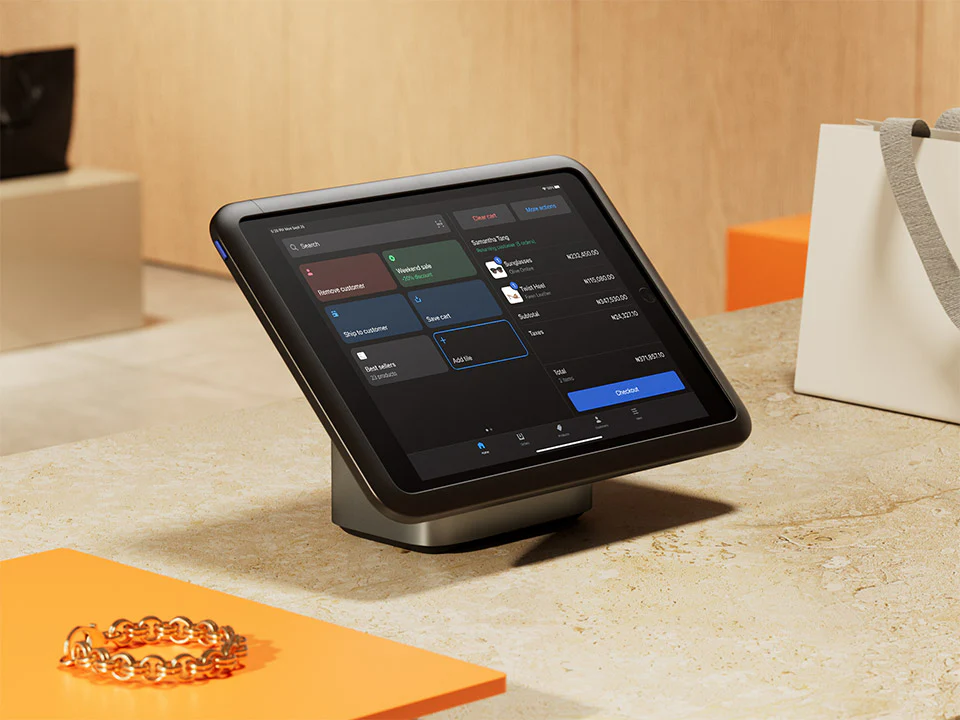
Shopify POS combines in-store sales with your Shopify store in a single system. It’s a good choice for sellers who want a stronger e-commerce presence than Square provides. Inventory updates automatically across both channels, and you can email shoppers a cart so they can finish their purchase online.
Key features
- Unified online and in-store stock: Inventory updates across every channel with each sale or return.
- Multi-location tracking: Manage stock across stores, online, and a warehouse from one place.
- Email cart to shoppers: Send in-store shoppers a cart to complete checkout online later.
- Stockout alerts and reports: Get notified on low stock and see which items sell fastest.
- Mobile app and card readers: Ring sales in-store or at pop-up events.
Pricing
Billed yearly: Basic $25/month, Grow $65/month, Advanced $360/month, Plus from $2,300/month.
Each extra POS Pro location adds $79/month. Card rates start at 2% with third-party providers.
Pros
- One system for an online store and register.
- Inventory syncs across channels in real time.
- Easy interface for training new staff.
Cons
- Needs a stable internet connection.
- Strongest only if you use Shopify online.
- Feature volume can overwhelm tiny shops.
7. KORONA POS
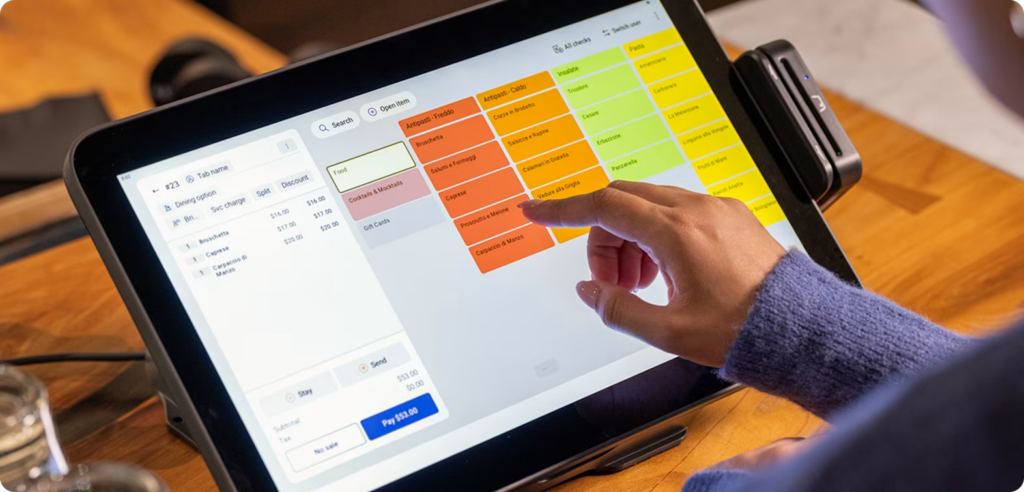
KORONA POS is a cloud-based retail system with strong inventory and analytics features. It’s a good fit for high-volume stores that need more detailed reporting than Square offers. KORONA includes ABC inventory analysis, multi-store management, self-checkout kiosks, and flat monthly pricing with no contracts.
Key features
- ABC inventory analytics: Rank items by profitability so you prioritize your best sellers.
- Self-checkout kiosks: Offer contactless self-pay to cut labor and checkout lines.
- Multi-store and franchise tools: Manage inventory and pricing across many locations from one system.
- Automatic reordering: Set stock to reorder automatically when levels run low.
- 24/7 in-house support: Reach phone and chat support anytime, including overnight emergencies.
Pricing
Billed monthly, no contracts: Core $59, Retail $79, Plus $99. Optional module packages cost extra.
A free trial is available.
Pros
- Deep inventory analytics for busy stores.
- Self-checkout kiosks cut labor and lines.
- Round-the-clock in-house support.
Cons
- Analytics depth can overwhelm small shops.
- Module add-ons raise the base price.
- Processing handled through outside partners.
8. SkyTab POS
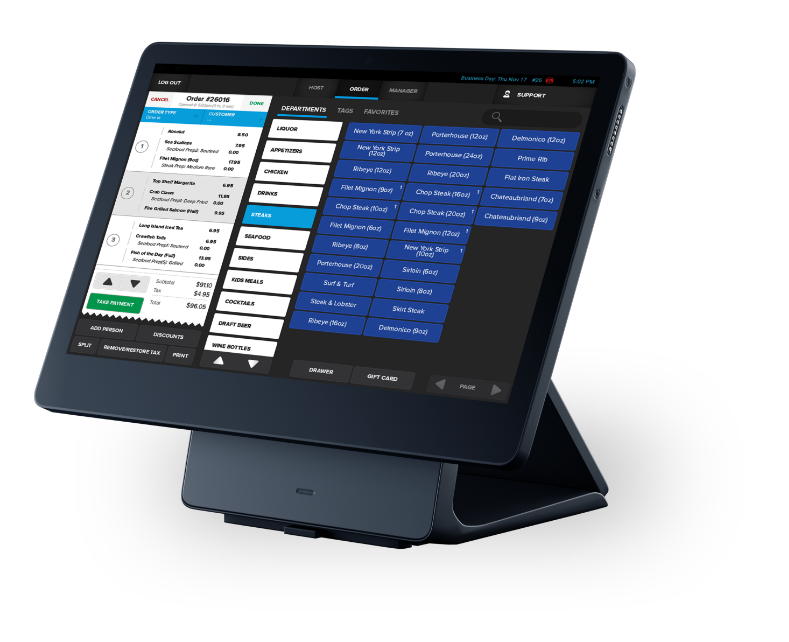
SkyTab is a restaurant POS from Shift4, available for a low monthly fee with no upfront hardware costs. It’s a good option for food-service businesses that need more features than Square provides. SkyTab includes online ordering, tableside payments, reservations, and delivery integrations all in one system.
Key features
- Tableside ordering and payments: Take orders and contactless payments right at the table.
- QR order and pay: Let guests scan a code to view the menu and order.
- Online ordering: Accept orders on your website and skip third-party fees.
- Reservations and waitlist: Manage bookings with real-time table availability and SMS alerts.
- Marketing and loyalty: Run a customer database, point rewards, and gift cards.
Pricing
$0 upfront, then $29.99/month for the core SkyTab Glass package. Add-on devices range from $20 to $29.99 per device per month.
Pros
- No upfront hardware cost, low monthly fee.
- Bundles online ordering and delivery integrations.
- Tableside and QR ordering built in.
Cons
- Built for restaurants, weak for general retail.
- Tied to Shift4 for payment processing.
- Add-on devices each carry monthly fees.
The Right Square POS Alternative
Most businesses switch from Square for similar reasons: its per-transaction fees can run high for busy stores, you can’t pick your own payment processor, and support is limited on lower-tier plans. Multi-store chains and specialty retailers also find Square’s reporting features limiting.
If fees are the problem, pick a system that lets you bring your own processor. If you’re scaling beyond a few locations, prioritize inventory and reporting depth over a low entry price. Restaurants get the most from Order Counter, with Toast and SkyTab as self-serve cloud options. Online-first sellers are a good fit for Shopify.
For independent retailers, Osprey closes the gaps Square leaves, and Order Counter does the same for restaurants and bars. Both give you vertical-specific tools plus local, in-person setup and support from bmc, rather than self-serve software you manage alone. So weigh your real friction first (fees, support, scale, or workflow), then match the system to it.