

Quick Summary
In this guide, we review the 12 best POS systems for liquor stores in 2026, including bmc, mPower Beverage, Bottle POS, and KORONA. We highlight key features like inventory tracking and age verification. Our comparison covers both single stores and large multi-location chains.
Here are our top 3 picks:
# | Tool | Best For |
1 | Osprey POS | Independent liquor retailers that want a local setup, training, and ongoing in-person service |
2 | mPower Beverage | Beer, wine, and spirits stores that prefer US-based support and detailed case-break tools |
3 | Bottle POS | Cloud-first liquor retailers with built-in delivery integrations and AI inventory grading |
Why Upgrading Your Liquor Store POS Matters
To run a modern liquor store, you need a dedicated system, especially if your store carries thousands of products. Specialized software helps you track cases, six-packs, and single bottles. Basic retail platforms often can’t keep up with strict alcohol sales rules.
A liquor-specific POS system tracks supplier rebates and checks customers’ ages at checkout. With a digital system, you can avoid losing money from manual inventory mistakes. We’ll show you 12 systems that help protect your profits, make daily work easier, and keep your shelves stocked.
Why Listen to Us?
For over 65 years, bmc has partnered with independent liquor stores to install, train, and support their POS systems. We are certified resellers of NCR, PAR, and TGCS, the platforms used by most independent liquor retailers.
We evaluate software by looking at features, customer reviews, and how each system performs in liquor stores.
Top 12 Liquor Store POS Systems Compared
# | Tool | Best For | Key Strength | Starting Price |
1 | Osprey POS | Independent liquor retailers in MI, OH, KY, IN | Local on-site setup, training, and hardware service from certified technicians | Custom pricing |
2 | mPower Beverage | Single-store and multi-location liquor retailers | AI-driven invoice processing, case breaks, and margin rules in plain English | Custom pricing |
3 | Bottle POS | Independent operators wanting cloud reporting and delivery | AI inventory grading and pre-loaded liquor product database | $59/month |
4 | KORONA POS | Liquor stores scaling across multiple locations | Processor-agnostic with handheld inventory scanning | $59/month |
5 | POS Nation | Owners wanting prebuilt hardware and software bundles | Online package builder with two-year hardware warranty | $59/month |
6 | LiquorPOS (Heartland) | Stores wanting rental, finance, or purchase options | Multipack inventory with built-in deposit handling | Custom pricing |
7 | Atlantic Systems (Spirits POS) | Wine-heavy shops that need vintage tracking | Multiple UPCs per product for seasonal variations | Custom pricing |
8 | WinePOS | Wine and liquor stores across single or multi-store setups | Parent-child item hierarchy for bottle sizes and vintages | $79/month |
9 | RetailzPOS | Liquor, CBD, and convenience store operators | AI back-office tools and EDI invoicing | Custom pricing |
10 | NRS POS | Small-format independent liquor stores on tight budgets | Transparent low-tier pricing with NRS Pay processing | $19.95/month |
11 | Lightspeed Retail | Wine and liquor stores that want cloud and e-commerce | Open API and customizable reporting across channels | $89/month (annual) |
12 | NCR Voyix Counterpoint | Specialty retailers with complex inventory needs | Case-break inventory with SQL-powered reporting | Custom pricing |
1. Osprey POS
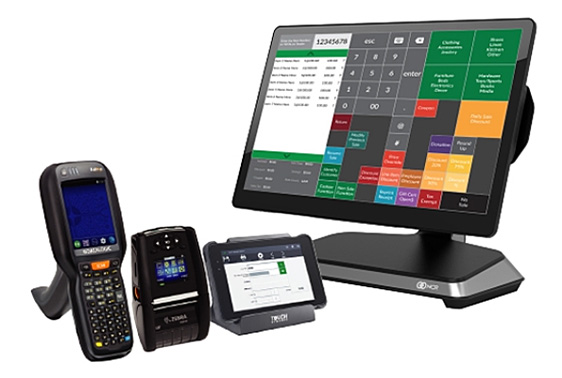
Osprey POS is a point-of-sale platform built for independent liquor retailers, whether running single stores or multi-location chains. It combines compliance tools, inventory accuracy, and supplier rebate automation into one connected system designed for beverage retail workflows.
Osprey is the in-house POS platform from bmc (Business Machines Company), which has spent 65+ years installing, training, and supporting POS systems for independent retailers. With Osprey you get Electronic Shelf Label sync, loss-prevention controls, and unified reporting across all stores. What sets it apart is the delivery model: certified bmc specialists install and configure each system, and the software is tailored to how your store operates rather than forced into a template.
bmc sends local technicians across Michigan, Ohio, Kentucky, and Indiana for on-site setup and hardware service. Retailers outside these areas get nationwide remote support and depot repair through the same partnership.
Key Features
- ID Verification: Built-in ID scanning and automated age prompts handle every restricted sale at checkout.
- Case-Break Pricing: Multi-unit pricing tracks cases, six-packs, and singles without separate SKU setup.
- Rebate Automation: Built-in data capture automatically submits supplier rebates, so you stop losing margin.
- ESL Sync: Electronic Shelf Labels update from the POS to match register pricing in real time.
- Multi-Store Pricebook: A unified pricebook keeps pricing and promotions consistent across all store locations.
- Loss Prevention: Tracks returns, voids, and overrides in real time across all registers and stores.
Pricing
Custom pricing based on store count, hardware needs, and configuration.
Pros
- Backed by bmc’s certified install, training, and service team.
- One comprehensive contract covers installation, training, and service.
- Purpose-built for independent liquor store owners.
- Handles case-break inventory across cases, six-packs, and singles.
- Local technicians handle installations across four Midwestern states.
Con
- Pricing details require a direct sales consultation.
2. mPower Beverage
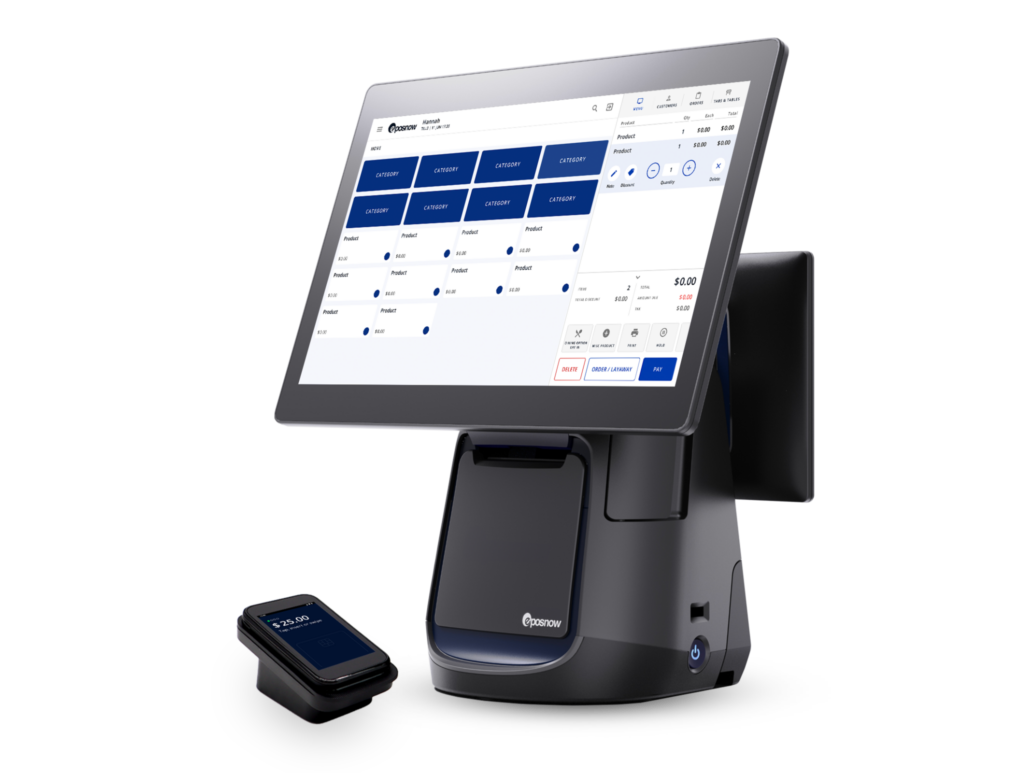
mPower Beverage is a point-of-sale platform built exclusively for independent liquor retailers. The software handles beverage retail complexities like case breaks, bottle deposits, and vendor compliance without manual workarounds.
Owners can automate vendor purchase orders, set margin rules, and process invoices using built-in AI. The platform supports single-store operators and multi-location chains on the same subscription.
Key Features
- Age Verification: The system scans driver’s licenses to verify legal age at checkout.
- Inventory Splitting: The software adjusts backend inventory counts when cashiers sell individual bottles from cases.
- Automated Ordering: The system generates vendor purchase orders based on historical sales velocity.
- Dual Pricing: Terminal screens display separate cash and credit prices to offset processing fees.
- Discount Bundling: The register calculates discounted prices when customers combine qualifying beverage products.
Pricing
Software and hardware pricing are customized based on store requirements.
Pros
- Works offline during internet outages.
- Retailers choose their preferred payment processor.
- Native integrations connect to online delivery platforms.
Cons
- Hardware investments are separate additional expenses.
- Smaller footprint than multi-vertical platforms.
- Self-checkout is limited to kiosk mode only.
3. Bottle POS
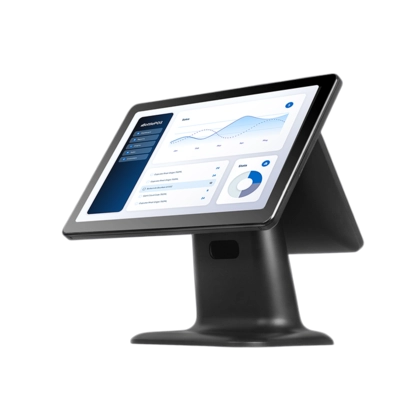
Bottle POS is cloud-based retail software built for liquor store inventory and compliance needs. The platform connects in-store inventory with online delivery channels so online sales match shelf stock. It uses AI to grade bottles by sales, import vendor invoices, and run loyalty programs. The system suits independent operators wanting delivery and reporting without an enterprise setup.
Key Features
- Vendor Invoicing: The integration imports vendor invoices and requires only a final review.
- Product Grading: AI grades each bottle using historical sales patterns.
- Preloaded Database: The software includes 20,000+ preloaded liquor products to speed setup.
- Customer Rewards: Customers earn loyalty points at checkout and redeem them for store discounts.
- Payment Offsets: Cash customers receive discounts, while credit users absorb processing fees.
Pricing
Core software starts at $59/month. Premium plans require custom quotes.
Pros
- No long-term service contracts are required.
- Native delivery integrations handle local orders.
- The QuickBooks connection simplifies back-office accounting.
Cons
- Hardware discount tied to switching promotions.
- Smaller integration ecosystem than on enterprise platforms.
- Cloud reporting depends on internet connectivity.
4. KORONA POS
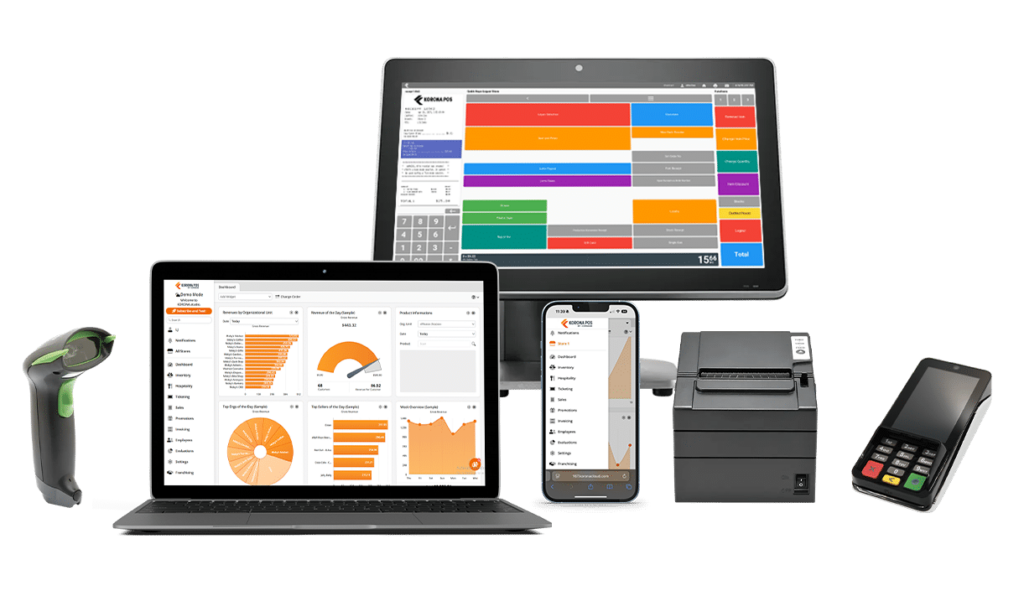
KORONA POS is cloud software built for liquor stores scaling from one location to many. The system offers a centralized dashboard to manage pricing, inventory, and reports on any device. Stock counts sync in real time across all stores, including handheld scanners. The platform also lets you keep your own payment processor instead of being locked into one.
Key Features
- Mobile Counting: Staff scan and update stock counts with lightweight handheld barcode scanners.
- Remote Management: Managers adjust product prices and employee permissions via web portals.
- Stock Replenishment: The system generates purchase orders based on daily sales velocity.
- ID Prompts: The register requires cashiers to verify identification before authorizing restricted sales.
- Data Synchronization: The cloud architecture synchronizes inventory data across multiple store locations.
Pricing
- Core starts at $59/month.
- Retail is $79/month.
- Plus is $99/month.
Pros
- Retailers freely choose their payment processor.
- Flat monthly rates without locked contracts.
- Native integrations push inventory online.
Cons
- Advanced reporting is locked to the Plus tier.
- Cloud-only access depends on internet stability.
- Less hands-on setup than local-partner platforms.
5. POS Nation
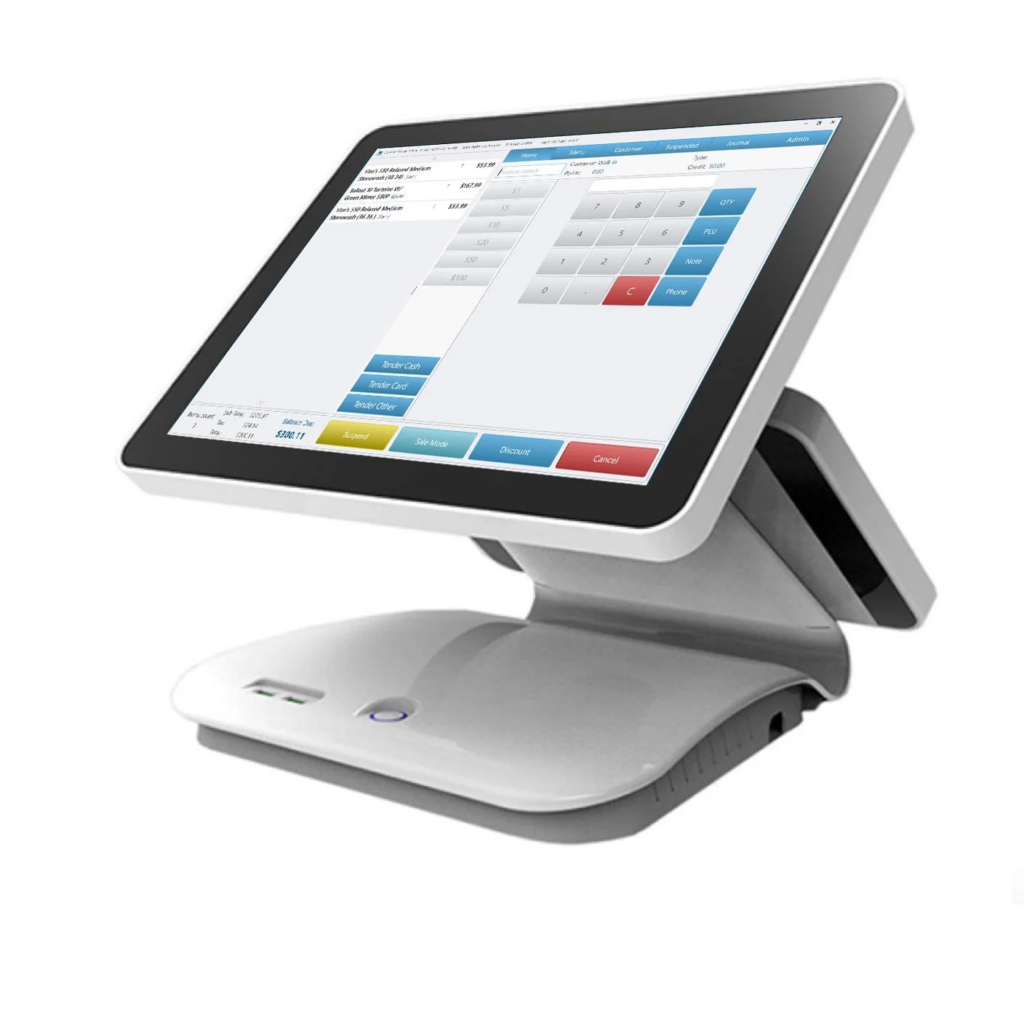
POS Nation pairs industry-specific liquor software with commercial hardware in prebuilt bundles for independent operators. The setup gives you a single onboarding team that manages your entire technology stack, rather than juggling multiple vendors.
You can configure your hardware, software, and pricing online before speaking with a sales rep. The platform includes age verification, automated invoicing, and mobile inventory tools designed for beverage retail.
Key Features
- Carton Tracking: The system tracks inventory when wholesale cases are broken down into individual retail bottles.
- ID Scanning: Barcode scanners read driver’s licenses to verify expiration dates and ages.
- Automated Receiving: Import vendor invoices automatically and eliminate manual data entry.
- Package Builder: Configure hardware, software, and pricing online before contacting a sales rep.
- Floor Scanners: Staff can scan and update inventory anywhere with a WiFi connection.
Pricing
Plans start at $59/month. Hardware discounts are tied to dual pricing agreements.
Pros
- Two-year hardware replacement warranty included.
- Basic software plans avoid long-term contracts.
- Free hardware available.
Cons
- Hardware discounts require the use of specific processing promotions.
- Unlocking advanced features requires custom quotes.
- Offers less hands-on installation than local partners.
6. LiquorPOS (Heartland)
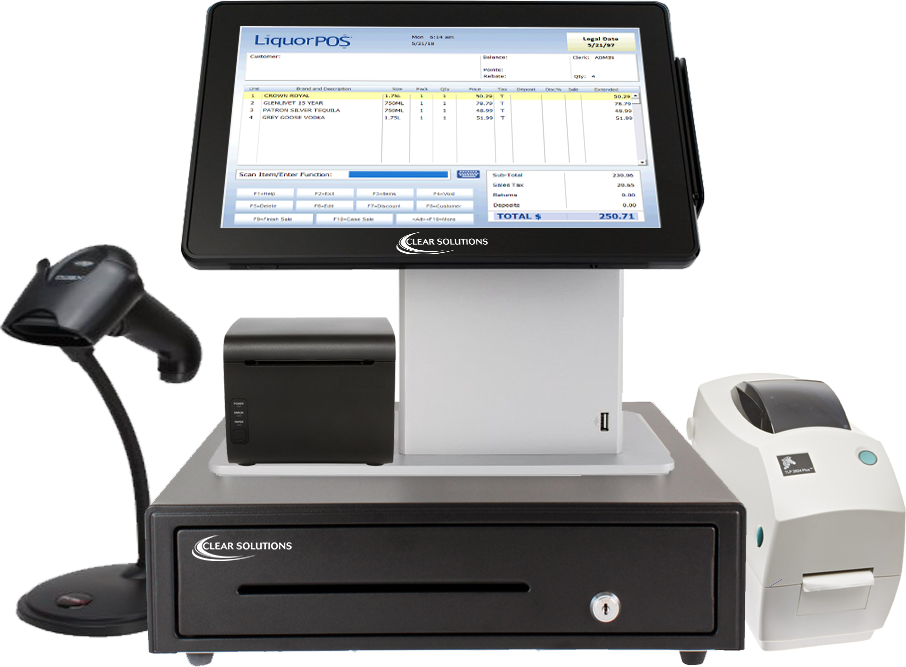
LiquorPOS is Heartland’s purpose-built point-of-sale software for retail beer, wine, and liquor stores. The platform handles beverage retail complexities like cases, six-packs, singles, and state deposits on sales and returns.
LiquorPOS includes age verification, automated purchase orders, customer loyalty, and enterprise-level reporting for single- or multi-store operations. Operators can choose rental, financing, or purchase programs to fit different budgets.
Key Features
- Multipack Sales: The platform updates inventory when you sell full cases, six-packs, or individual bottles.
- Deposit Handling: The register manages state bottle deposits for sales and product returns.
- License Reading: Certified barcode scanners verify customer birth dates before authorizing restricted sales.
- Order Generation: The software generates purchase orders when inventory falls below preset minimums.
- Staff Auditing: The security system reduces shrinkage by tracking voided transactions and deleted items.
Pricing
Operators choose from hardware rentals, financing agreements, or purchase programs through custom quotes.
Pros
- Rental programs provide new hardware on a periodic basis.
- Outright purchase plans include free label printers.
- Custom security levels restrict unauthorized employee access.
Cons
- Software requires Heartland payment processing.
- Specific monthly pricing is not published.
- Less AI automation than newer competitors.
7. Atlantic Systems (Spirits POS)
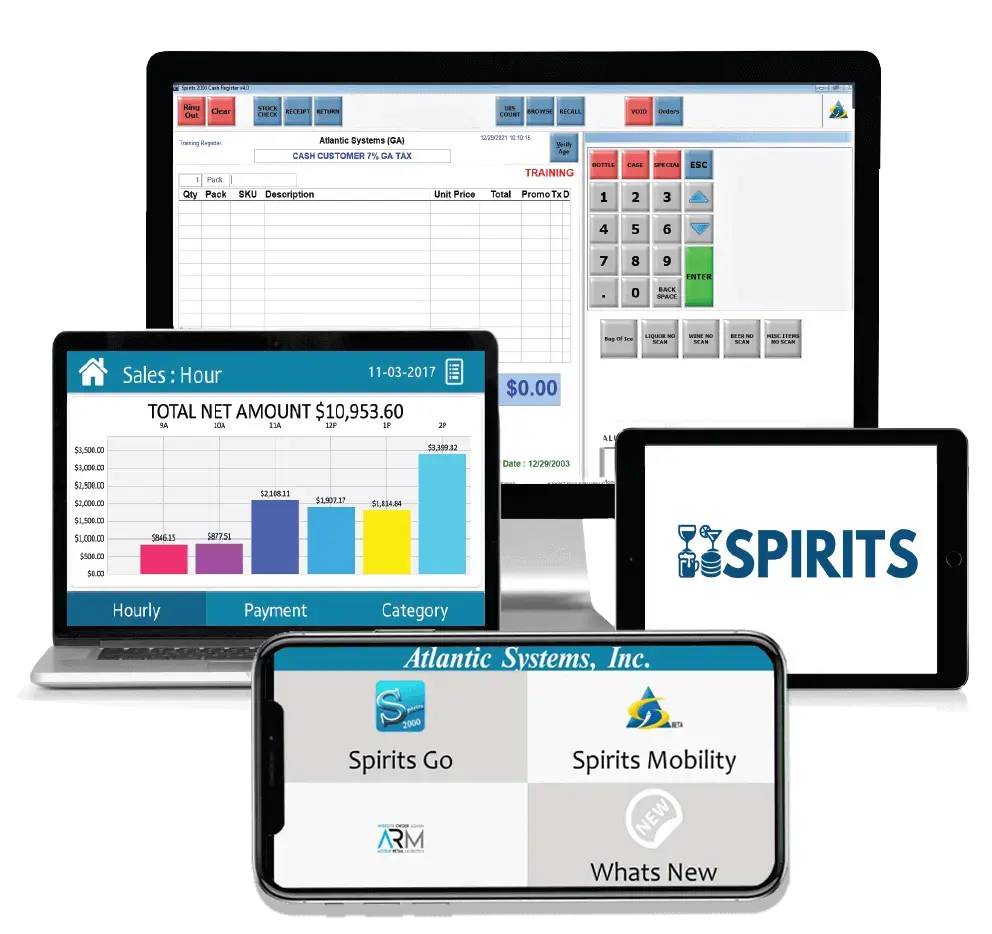
Atlantic Systems is a New Jersey-based POS provider founded by two liquor store owners who built Spirits software for beer, wine, and spirits retailers. The system handles vintage tracking, frequent shopper programs, advanced age verification, and credit card integration in one platform. It works for single stores or multi-location chains with the same setup.
Key Features
- Vintage Tracking: The system tracks seasonal and annual product variations under a single UPC across your catalog.
- Frequent Shopper Program: Build customer loyalty with targeted marketing based on purchase history and shopping behavior.
- Age Verification: Advanced ID checks are automatically prompted for cashiers before authorizing restricted beverage sales at checkout.
- Cloud Gift Cards: Sell and redeem gift cards in the cloud while reducing processing fees.
- Time Clock Management: Staff clock in and out through a single interface, with built-in payroll reporting.
Pricing
Custom pricing based on store setup and configuration. Contact sales for a quote.
Pros
- Works for single stores or chains.
- E-commerce integration available natively.
- Includes time clock and payroll reporting.
Cons
- No published pricing on the website.
- Limited integration ecosystem.
- Requires a demo before any pricing details.
8. WinePOS
WinePOS is a point-of-sale system built for wine and liquor stores in the beverage alcohol industry. The platform manages inventory across sizes, including singles, packs, and cases, for single-location or multi-store operations. It includes built-in age verification, a parent-child item hierarchy, e-commerce integrations, and dedicated account management.
Key Features
- Bottle Size Management: Track inventory across cases, packs, singles, and individual bottle sizes from a single product file.
- Parent-Child Hierarchy: Link multiple bottle sizes and vintages under a single product to streamline inventory tracking.
- Customer Loyalty: Built-in loyalty programs include customer groups, billing, and wholesale pricing tiers.
- E-Commerce Integration: Connect to delivery apps and online platforms via FTP file uploads and API access.
- Mobile App Access: Owners and managers can access reports, inventory, and pricing on iOS and Android devices.
Pricing
- Pricing starts at $79/month for the Lite plan.
- Basic, Standard, Premium, and Enterprise tiers are available with custom pricing for chains and superstores.
Pros
- Compliant with regulations across 50 states.
- One-on-one onboarding for migration.
- Mobile app for iOS and Android.
Cons
- Hardware components incur separate expenses.
- Advanced integrations require premium plans.
- The system requires dedicated live sales demonstrations.
9. RetailzPOS
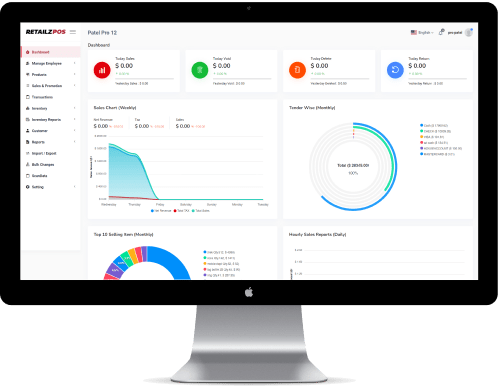
RetailzPOS is a retail POS platform designed for liquor stores, CBD stores, and convenience stores. The system supports dual pricing, EDI invoicing, e-commerce integration, and customer loyalty programs in one setup. It also includes AI tools like Support RAI for store assistance and Invoicely RAI for automated supplier invoicing.
Key Features
- Dual Pricing: Display cash and card prices at checkout so customers clearly see both options.
- EDI Invoicing: Simplify supplier transactions with electronic invoicing that automatically imports vendor data.
- Electronic Shelf Labels: Update shelf pricing instantly with digital labels linked to the POS.
- Scan Data Programs: Earn cash back by submitting scan data and by taking advantage of multi-item discounts at checkout.
- NVR Integration: Connect the POS to video surveillance for transaction-level loss prevention.
Pricing
Multiple packages available based on store features. Contact sales for a quote.
Pros
- AI back-office assistant included.
- Native delivery app integrations available.
- 24/7 customer support team.
Cons
- No published pricing on the website.
- Multiple packages can complicate selection.
- Some features tied to specific hardware.
10. NRS POS (National Retail Solutions)
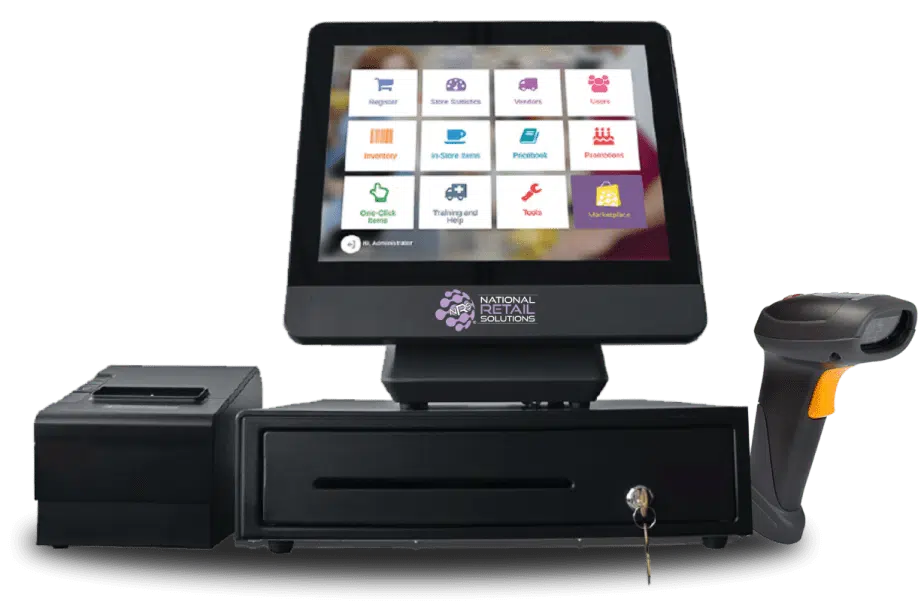
NRS POS is a budget-friendly point-of-sale bundle for small independent liquor stores. The system pairs low-cost hardware with NRS Pay credit card processing, automated age verification, and inventory tracking. It also includes lotto reconciliation, e-commerce delivery via DoorDash and Grubhub, and the BOSS Local Shopping App for home delivery.
Key Features
- Cash Discount: The checkout screen displays separate cash and credit prices to offset standard payment processing fees.
- ID Scanning: Dedicated barcode scanners quickly verify customer identification during restricted alcohol retail checkout transactions.
- Camera Sync: The digital system overlays real-time checkout transactions directly onto local security surveillance footage.
- Panic Button: A discreet digital alert silently notifies local police departments and immediately opens the cash drawer.
- Lotto Tracking: The software carefully tracks instant lottery tickets and reconciles daily payouts to prevent theft.
Pricing
- Basic plan starts at $19.95/month with NRS Pay.
- Pro is $34.95/month.
- Advanced is $49.95/month.
- Elite is $79.95/month.
- Pay yearly and get one month free. Without NRS Pay, prices increase across all tiers.
Pros
- Transparent monthly pricing is published online.
- 24/7 multilingual customer support.
- No long-term contracts or termination fees.
Cons
- Best pricing requires using NRS Pay.
- Many features are sold as premium add-ons.
- Advanced features locked to higher tiers.
11. Lightspeed Retail
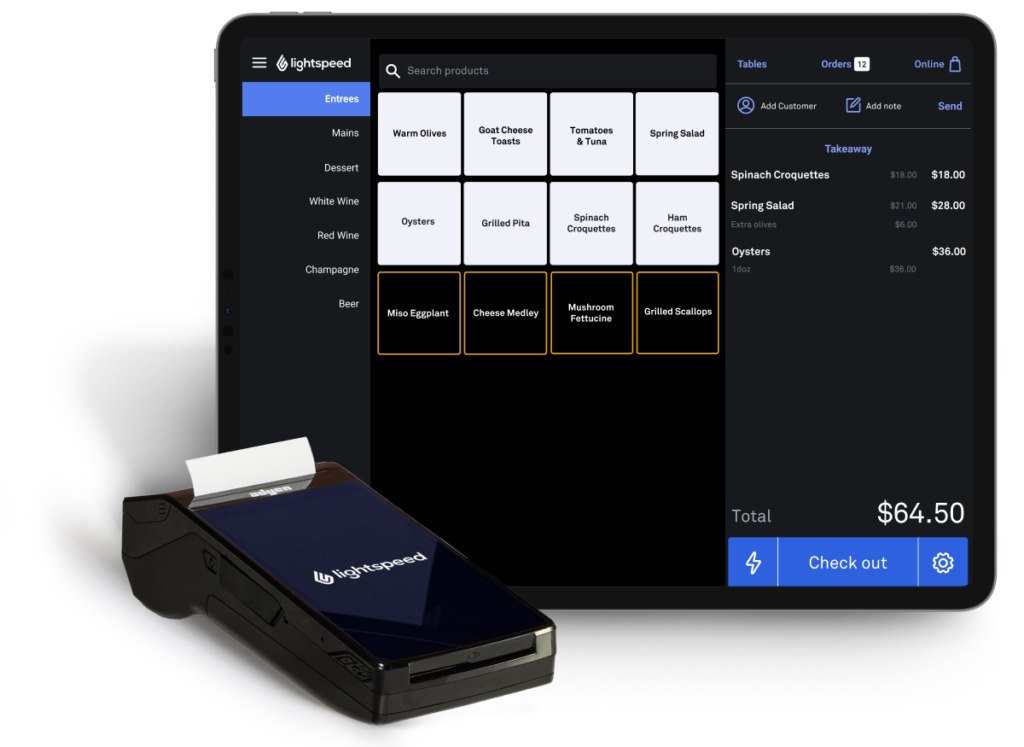
Lightspeed Retail is a cloud-based POS platform made for wine and liquor stores. It manages inventory for different variants, bottle sizes, and case packs with real-time stock updates. The system includes age-verification prompts, built-in loyalty programs, e-commerce integration, and customizable reporting.
Key Features
- Inventory with Variants: Track wine and liquor by grape, vintage, region, and bottle size using custom attributes.
- Embedded Payments: Accept credit, debit, and mobile payments with end-to-end encryption and PCI compliance.
- Open API: Build custom workflows and integrations tailored to your liquor store operations.
- Lightspeed Insights: Customize reporting across multiple sales channels and locations from a single dashboard.
- Built-In E-Commerce: Build an online store or connect to an existing site with shipping and pickup options.
Pricing
- Basic starts at $89/month, billed annually.
- Core is $149/month, billed annually.
- Plus is $289/month, billed annually.
- Hardware, payments, and add-ons are priced separately.
Pros
- Cloud-based with mobile-friendly reports.
- 24/7 support and dedicated account manager.
- Strong e-commerce and omnichannel tools.
Cons
- Advanced features locked to the Plus tier.
- Hardware and add-ons are priced separately.
- More complex setup for small stores.
12. NCR Voyix Counterpoint
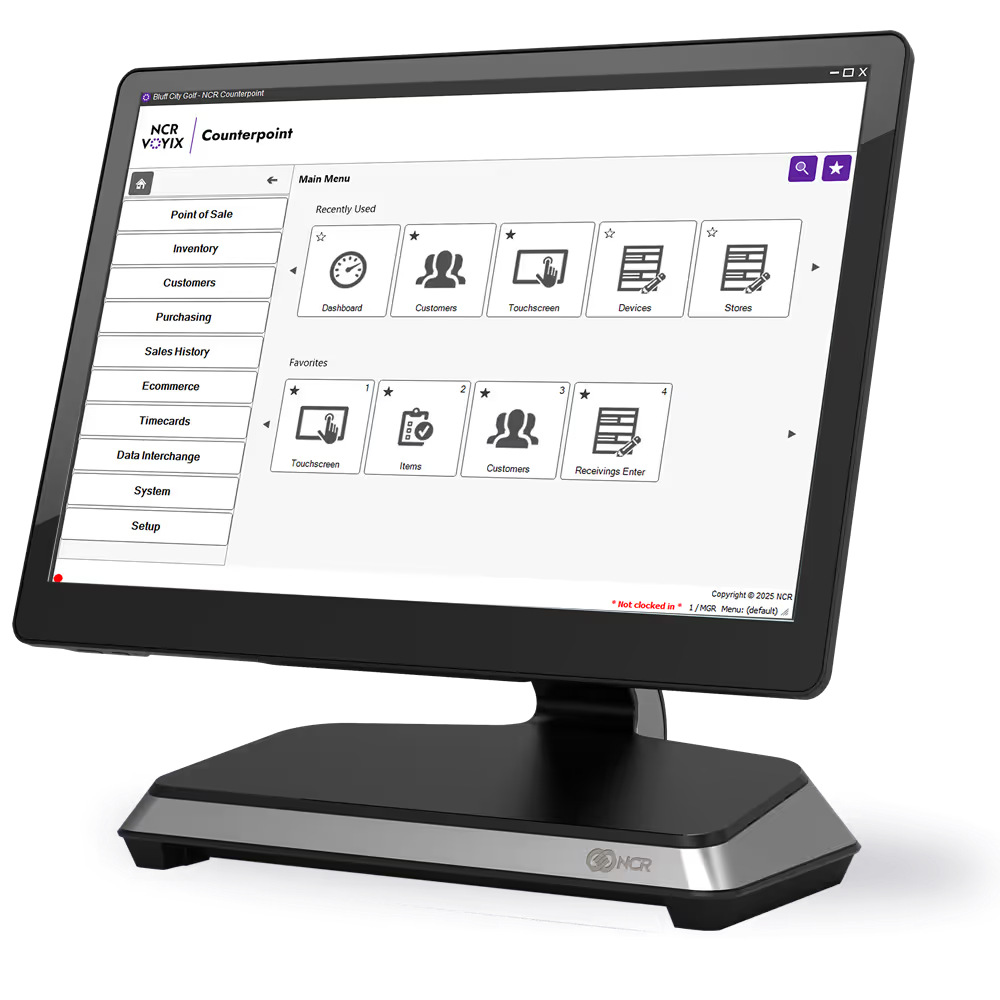
sNCR Voyix Counterpoint is a retail management system for specialty retailers, including wine and liquor stores. It supports case-break inventory, age verification, flexible pricing, loyalty programs, and e-commerce integration in one setup. The system also offers automated purchasing, vendor credit tracking, and detailed reporting with a built-in SQL database.
Key Features
- Case-Break Inventory: Track bottles, six-packs, and cases under a single SKU with automatic stock adjustments.
- Age Verification: ID scanner integration with customizable on-screen prompts to comply with local alcohol regulations.
- Flexible Pricing: Set up mix-and-match discounts, case-break pricing, and date-specific promotions.
- Automated Purchasing: Smart reorder recommendations and vendor credit tracking across multiple suppliers.
- Reporting and Analytics: Built-in SQL database generates detailed reports on sales velocity, inventory aging, and margins.
Pricing
Custom pricing based on store count, hardware needs, and feature requirements. Contact NCR Voyix for a quote.
Pros
- Configurable touchscreen point-of-sale terminals.
- Supports standard retail hardware seamlessly.
- Built-in SQL database powers deep reporting.
Cons
- No published pricing on the website.
- Requires an implementation partner for deployment.
- Hardware is sold separately from software.
How to Choose the Right Liquor Store POS System
To choose the best liquor POS system for your business, focus on the software features that are most important for beverage retail. Use these criteria to help narrow your options.
- Case-break and multi-unit pricing: Liquor inventory moves in cases, six-packs, and singles. Your POS should track all three under one SKU, so counts stay accurate without manual math.
- Age verification and compliance: Every restricted sale requires an ID check. The system should scan driver’s licenses, log every verification, and automatically flag expired or out-of-state IDs.
- Rebate and supplier program automation: Manufacturer rebates and scan data programs hide real profit. The POS should capture and submit that data without spreadsheets or manual re-entry.
- Multi-store pricing and reporting: If you run more than one location, pricing and promotions should update from a single pricebook. Reporting should roll up across stores without stitching files together.
- Support model after go-live: Software with great features still fails when the install team disappears. Look for an in-person setup where possible, or at a minimum, a support team that knows liquor retail.
Start With a Liquor POS Built Around How You Sell
Most liquor stores don’t lose money because of the software itself. They lose money when their systems aren’t set up for case breaks, rebates, or compliance, which are essential in beverage retail.
A platform with strong features can still cost you money if installation is rushed, training is lacking, or support ends after launch. The right system depends on whether you need scalability, simplicity, or local support that knows your store.
If you run an independent liquor store, bmc provides hands-on installations and regional support. Our local technicians know what holiday rushes, busy weekends, and rebate cycles are really like in a liquor store.
Are you ready to explore a system designed for your liquor store?