

Quick Summary
This guide compares the 10 best POS systems for grocery stores, including Osprey POS, IT Retail, and ECRS. It focuses on grocery-specific workflows such as weighted items, pricing control, inventory tracking, and store-level reporting to help independent and multi-store grocers choose a system that fits how their stores operate.
Here are our top picks:
# | Tool | Best For |
1 | Osprey POS | Independent grocers needing local on-site setup, training, and ongoing operational support |
2 | IT Retail | Grocers managing fresh departments, weighted inventory, and day-to-day store operations |
3 | ECRS | High-volume grocery stores needing integrated scale systems and lane-level control |
Why Picking the Right POS System Matters for Grocery Stores
Independent grocers often reach a point where generic point-of-sale hardware can no longer handle the specialised workflows of food retail. The right POS system addresses essential tasks like EBT and eWIC compliance, perishable inventory tracking, and pricing control across multiple locations.
A tailored solution simplifies daily operations, reduces human error, and provides actionable insights into store performance. This guide compares the best POS systems for grocery stores in 2026, focusing on platforms that meet the unique needs of independent and multi-store retailers.
Why Listen to Us?
With over 65 years of experience supporting independent retailers, we understand how POS systems perform in real grocery store environments. Our evaluation focuses on pricing control, inventory tracking, compliance, reporting, and multi-store operations. We also assess how vendors handle rollout, staff training, and ongoing support, which directly affects how systems perform after implementation.
Top 10 POS Systems for Grocery Stores Compared
Selecting a grocery-specific platform ensures that high-volume transactions, weighted inventory, and regulated payment types are handled natively rather than through third-party workarounds. This comparison highlights how each platform fits different grocery store models, from single-location shops to high-volume chains.
# | Tool | Best For | Key Strength | Starting Price |
1 | Osprey POS | Independent grocers requiring grocery-specific workflows, local support, and on-site training | Combines POS software, kiosks, hardware, and support; specializes in independent grocery retailers | Custom pricing |
2 | IT Retail | Independent grocers managing fresh departments and weighted inventory | Scale integration and EBT/WIC compliance | Quote-based |
3 | ECRS (Catapult POS) | High-volume grocery stores and supermarket chains | Unified system with real-time updates | Custom pricing |
4 | SMS LOC | Large grocery chains and regional supermarkets | Deep control over pricing, inventory, and promotions | Custom pricing |
5 | Toshiba ELERA | Enterprise grocery operations requiring scalable infrastructure | Modular, AI-powered with self-checkout options | Custom pricing |
6 | Toast Retail | Grocery and convenience operators needing unified POS and IT infrastructure | Multi-vertical support with on-site service | Custom pricing |
7 | Vori | Modern independent grocers replacing legacy systems | Cloud-based platform with supplier ordering (runs on MacOS) | Custom pricing |
8 | NCR Voyix (ENCOR POS) | Large grocery chains with complex operations and high volume | Self-checkout and centralized pricing | Custom pricing |
9 | RORC POS | Independent grocery stores requiring strong reporting and compliance | Comprehensive store operations and self-checkout integration | Custom pricing |
10 | Square for Retail | Small grocery stores looking for a simple, general-purpose POS system | Multi-location inventory and loyalty programs | Free to $149/month |
Let’s take a closer look at each platform, focusing on the features and service models that make them suitable for grocery environments.
1. Osprey POS
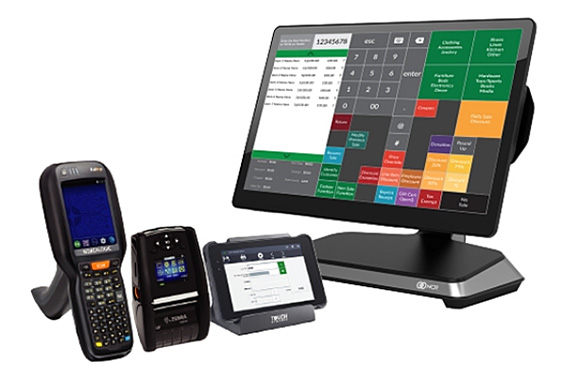
Osprey POS delivers a complete retail solution, designed specifically for grocery and high-volume retail environments. It combines intuitive self-service kiosks, integrated point-of-sale software, hardware, and on-site support to ensure smooth operations, improve customer satisfaction, and optimize labor efficiency.
The Osprey solution, delivered by Business Machines Company (bmc), provides independent grocers with comprehensive setup and ongoing service, ensuring that each store receives personalized attention to keep operations running efficiently.
Key Features
- Self-Checkout Kiosks: Customers can independently complete transactions, reducing wait times and streamlining the checkout process.
- Age Verification Compliance: Configurable register prompts and ID scanning ensure smooth handling of age-restricted items like alcohol and tobacco, ensuring regulatory compliance.
- Inventory Tracking & Replenishment: Smart tools automatically monitor product movement and stock levels, sending alerts for low inventory and making replenishment easier.
- Electronic Shelf Labeling (ESL): Syncs product pricing with digital tags on shelves, eliminating pricing discrepancies between registers and displays.
- Painless Payment Options: Accepts a wide range of payment methods, from traditional card payments to contactless and mobile wallets, ensuring smooth transactions.
- Product Lookup and Customer Self-Service: Customers can look up product information and promotions directly from kiosks, freeing up staff to focus on other tasks.
- On-Site Implementation and Training: Local technicians handle the installation and provide comprehensive staff training to ensure seamless integration and use.
Pricing
Osprey POS offers custom pricing based on hardware requirements, store setup, and the number of locations. Contact BMC for a tailored consultation.
Pros
- Combines POS software, kiosks, hardware, and support into one complete package.
- Self-checkout kiosks reduce wait times and streamline operations.
- Built-in age verification ensures consistent compliance with restricted sales laws.
- Automated inventory tracking and replenishment keep shelves stocked with minimal manual oversight.
- bmc provides on-site technicians for setup, repairs, and ongoing support.
Cons
- Requires a direct consultation to determine the exact pricing structure.
2. IT Retail
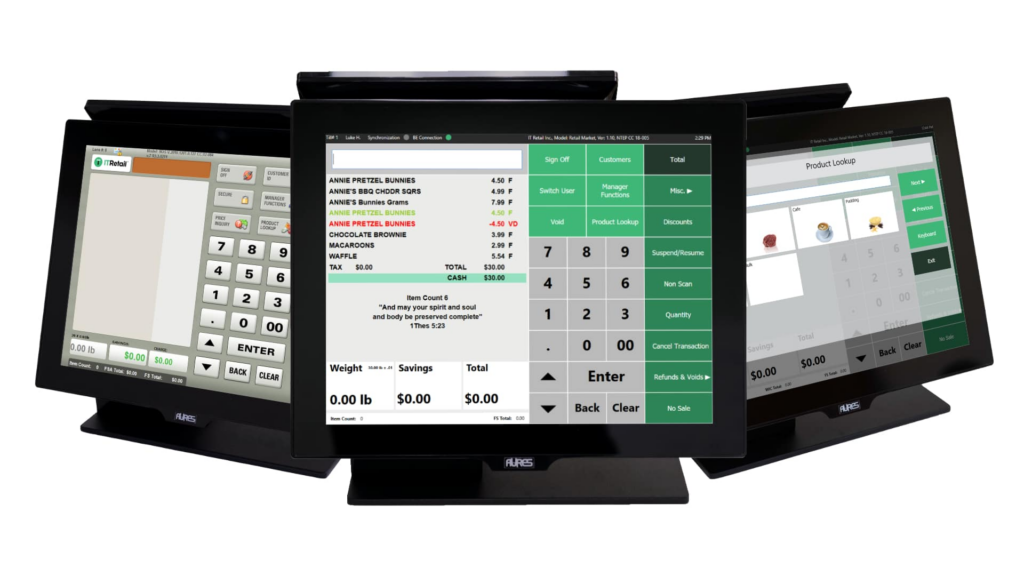
IT Retail is a POS system designed for independent supermarkets and fresh departments. It integrates with deli and meat scales, transmitting weight data directly to the POS. The system supports EBT and WIC compliance, automatic inventory management, and dynamic pricing based on wholesale cost changes. IT Retail focuses on streamlining grocery-specific tasks, particularly in perishable inventory management.
Key Features
- Deep Scale Integration: Automatically transmits weight data from scales to the POS, reducing errors and preventing manual entry issues.
- Weighted Inventory Tracking: Tracks inventory by weight for perishable items, essential for managing deli and produce departments.
- EBT & eWIC Support: Streamlines EBT/SNAP and eWIC processing, automatically segregating eligible items in mixed transactions.
- Grocery Back Office: Includes tools for printing shelf tags and managing mix-and-match promotions.
- Offline Mode: Ensures uninterrupted sales processing even during internet outages, critical for high-traffic grocery environments.
Pricing
IT Retail uses a quote-based pricing model based on hardware setup and store size.
Pros
- Handles weighted inventory and perishables directly.
- Includes grocery compliance tools like EBT and eWIC.
- Built specifically for independent grocery environments.
Cons
- Interface can feel outdated compared to newer systems.
- Requires dedicated hardware rather than flexible tablet setups.
- Initial setup can be more involved due to system depth.
3. ECRS (Catapult POS)
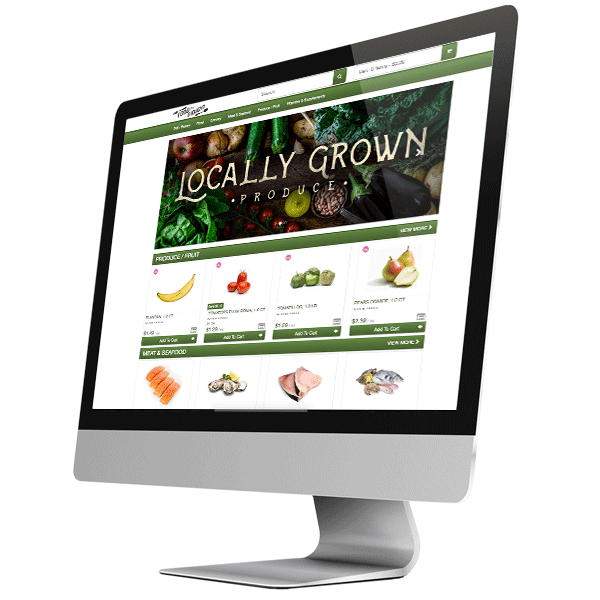
ECRS Catapult POS is an enterprise-grade system designed for high-volume grocery chains. It integrates POS, inventory management, and pricing into a single system, enabling real-time price updates across all touchpoints, including self-checkout and online stores. The system also features automated ordering driven by sales trends, helping to prevent out-of-stock situations.
Key Features
- Unified Transaction Logic: Connects POS, deli scales, and web orders to one database for real-time inventory accuracy.
- Native Self-Checkout (SCO): Supports self-checkout with weight-based security, minimizing loss and theft.
- Automated Ordering (EOQ): Automatically generates purchase orders based on inventory levels and sales velocity, ensuring optimal stock levels.
- Direct Store Delivery (DSD): Manages vendor deliveries and inventory directly from suppliers, simplifying inventory management.
- Click & Collect: Supports online ordering with in-store pickup, integrating with inventory systems for real-time updates.
Pricing
ECRS uses custom enterprise pricing based on store size, hardware, and system scope.
Pros
- Handles high transaction volume across multiple lanes and stores.
- Eliminates syncing issues with a single system architecture.
- Provides real-time visibility into store performance.
Cons
- Higher cost due to enterprise-level hardware and setup.
- Steeper learning curve for store teams.
- More system depth than smaller stores typically need.
4. LOC SMS
LOC SMS is a grocery-focused retail management platform built for supermarkets that need deep control over pricing, inventory, and store operations. It connects front-end checkout with back-office and corporate systems in one unified environment, making it suitable for stores managing large product catalogs, complex promotions, and multiple locations.
Key Features
- Item and price management: Supports mix-and-match pricing, tiered discounts, and bulk price updates across categories and departments.
- Grocery-specific integrations: Connects directly with eWIC systems, fuel pumps, and scale hardware for accurate weighted item processing.
- Advanced inventory tracking: Tracks stock levels, expiry dates, and batch data while supporting automated computer-assisted ordering.
- Customer loyalty engine: Enables targeted promotions, rewards programs, and personalized offers based on shopping behavior.
- Omnichannel support: Includes e-commerce, mobile POS, and kiosk tools to support in-store and digital grocery operations.
Pricing
LOC SMS uses custom pricing based on store size, deployment setup, and reseller configuration.
Pros
- Unified system connects POS, back office, and corporate data.
- Handles complex grocery pricing and promotional structures well.
- Scales from single stores to large supermarket chains.
Cons
- Requires technical knowledge for reporting and system customization.
- Setup complexity can increase implementation time.
- Support quality depends on the reseller partner.
5. Toshiba ELERA
Toshiba ELERA is an enterprise grocery commerce platform designed for high-volume retailers that need real-time data, automation, and scalable infrastructure. It uses a modular architecture that allows stores to modernize checkout, inventory, and customer engagement without replacing their entire system at once.
Key Features
- AI-powered produce recognition: Uses computer vision to identify produce items at checkout and reduce manual entry errors.
- Self-checkout optimization: Improves throughput with configurable kiosks and AI-assisted flow management for busy lanes.
- Loss prevention tools: Detects unscanned items and suspicious behavior to help reduce shrink in real time.
- Microservices architecture: Allows retailers to scale features independently through APIs without full system overhauls.
- Unified commerce capabilities: Connects in-store, mobile, and online operations for consistent data and customer experience.
Pricing
Toshiba ELERA uses enterprise pricing based on infrastructure, deployment scale, and feature requirements.
Pros
- Highly scalable platform for large grocery operations.
- Strong AI-driven tools for checkout speed and shrink reduction.
- Flexible deployment without full system replacement.
Cons
- Complex implementation requires significant planning and integration.
- Higher cost makes it less suitable for small stores.
- Steeper learning curve for internal IT teams.
6. Toast Retail
Toast Retail offers a POS solution designed for grocery stores that also need strong integration with foodservice operations. It is ideal for stores with a deli, prepped food section, and stocked beverage. Toast Retail hardware and cloud-based systems ensure reliable performance even in high-volume settings, while offering powerful inventory management and easy-to-use checkout tools.
Key Features
- High-Speed Retail Scanning: Quickly process transactions with barcode scanning, supporting UPCs and SKUs to manage inventory with ease.
- Unified Inventory System: Handles both deli-prepared items and bottled goods in one integrated system, streamlining stock management across diverse categories.
- Integration Marketplace: Connects with over 100 partners for payroll, marketing, loyalty programs, and other essential services, allowing for a more streamlined operation.
- Rugged Hardware: Built with the same durable technology used in the restaurant industry, Toast’s hardware, like the Toast Flex terminal and Toast Go 2 handhelds, can withstand high-traffic environments.
- Offline Mode: Process transactions during internet disruptions, ensuring credit card payments continue seamlessly without interruptions.
Pricing
Offers a flexible pricing model starting with a $0 upfront cost for the New Retailer starter kit, which includes integrated processing. Monthly software fees typically range from $75 to $165 per terminal, depending on features and configurations.
Pros
- Combines POS, kitchen, and payroll functions in one system.
- Easy-to-use interface for quick staff training.
- Cloud-based for real-time sales and inventory tracking.
Cons
- Requires using Toast for all credit card processing.
- Limited grocery-specific replenishment features.
- Monthly fees increase operational costs over time.
7. Vori
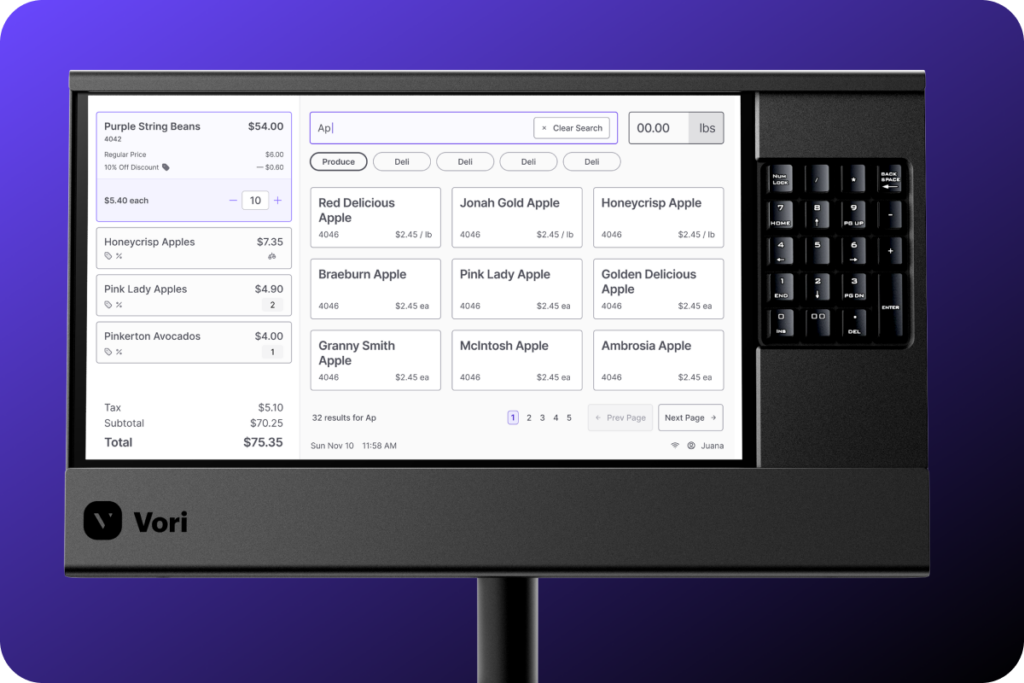
Vori is a modern grocery POS that runs on iOS and combines inventory, supplier ordering, and pricing in one system. It connects directly with wholesalers and automates pricing updates, giving store teams a simpler way to manage margins, stock and inventory, and vendor relationships from a mobile device.
Key Features
- Supplier Integration: Connects directly to major wholesaler catalogs, streamlining the ordering process and ensuring accurate stock levels.
- Pricing Automation: Tracks wholesale cost changes and automatically adjusts retail prices to maintain margins.
- ESL Integration: Pushes price updates directly to digital shelf labels, keeping in-store pricing synchronized with the back office.
- Inventory Tracking: Monitors stock levels in real-time, helping reduce stockouts and excess inventory.
- Mobile Back Office: Allows store managers to manage pricing, inventory, and vendors from mobile devices.
Pricing
Vori uses a custom pricing model and requires a demo for detailed quotes.
Pros
- Combines POS, inventory, and supplier ordering in one system.
- Reduces manual entry through automated ordering and pricing updates.
- Designed for modern grocery workflows rather than legacy systems.
Cons
- Requires reliable internet connection for full functionality.
- Often tied to integrated payment processing.
- Limited compatibility with older hardware systems.
8. NCR Voyix
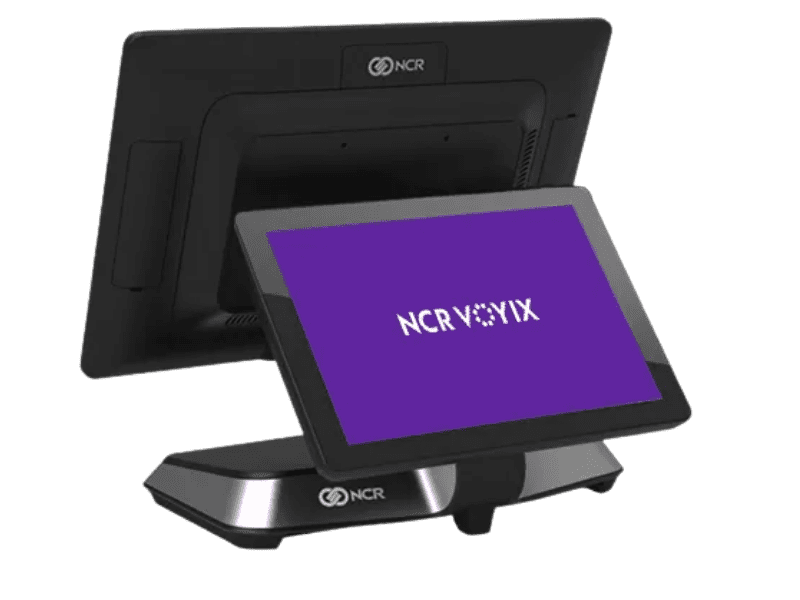
NCR Voyix is an enterprise-grade POS system designed for large grocery chains that need to manage hundreds of stores and millions of SKUs. It offers a centralized platform that integrates POS, inventory, pricing, and customer data. NCR Voyix also includes advanced self-checkout features powered by AI and computer vision to improve checkout accuracy and speed.
Key Features
- Enterprise Management: A cloud-enabled platform that manages large-scale grocery operations, connecting POS, inventory, pricing, and customer data.
- Self-Checkout (SCO) Integration: Native self-checkout solutions with advanced security features to prevent shrinkage and improve customer experience.
- Real-Time Data: Provides granular insights into store performance, allowing managers to make real-time adjustments to improve efficiency.
- Centralized Pricing: Allows for centralized pricing management, making it easier to handle promotions, markdowns, and multi-location pricing.
- High-Volume Reliability: Known for its robustness, NCR Voyix ensures minimal downtime, crucial for high-traffic, large grocery operations.
Pricing
NCR Voyix uses enterprise-level custom pricing based on store count, infrastructure, and deployment scale.
Pros
- Handles high transaction volumes across multiple locations.
- Combines POS, self-checkout, and back-office into one system.
- Supports centralized control for pricing and promotions.
Cons
- Requires significant upfront investment and implementation planning.
- System complexity requires trained staff to manage effectively.
- Less practical for single-store or low-volume grocers.
9. RORC POS
RORC POS is a grocery-specific system designed for independent supermarkets that need fast checkout, strong inventory control, and detailed back-office management. It acts as a central system for store operations, combining front-end sales with tools for reporting, compliance, and supplier management.
Key Features
- Perishable inventory management: Handles variable-weight items with integrated scale support for produce, meat, and deli departments.
- Direct store delivery tracking: Manages vendor deliveries and inventory updates directly at the store level.
- Customizable reporting tools: Provides detailed drill-down reports for sales, inventory, and operational performance.
- Advanced promotion engine: Supports complex pricing models such as BOGO, bundle offers, and loyalty-based discounts.
- Self-checkout and e-commerce integration: Connects in-store POS with kiosks and online ordering platforms.
Pricing
RORC uses custom pricing based on store size, system configuration, and deployment needs.
Pros
- Optimized for high-speed checkout in grocery environments.
- Strong support for independent grocery store operations.
- Highly flexible reporting and promotional tools.
Cons
- Initial setup can be complex due to system depth.
- Advanced features increase the overall cost for smaller stores.
- Back-office tools require training to be fully utilized.
10. Square for Retail (Squareup)
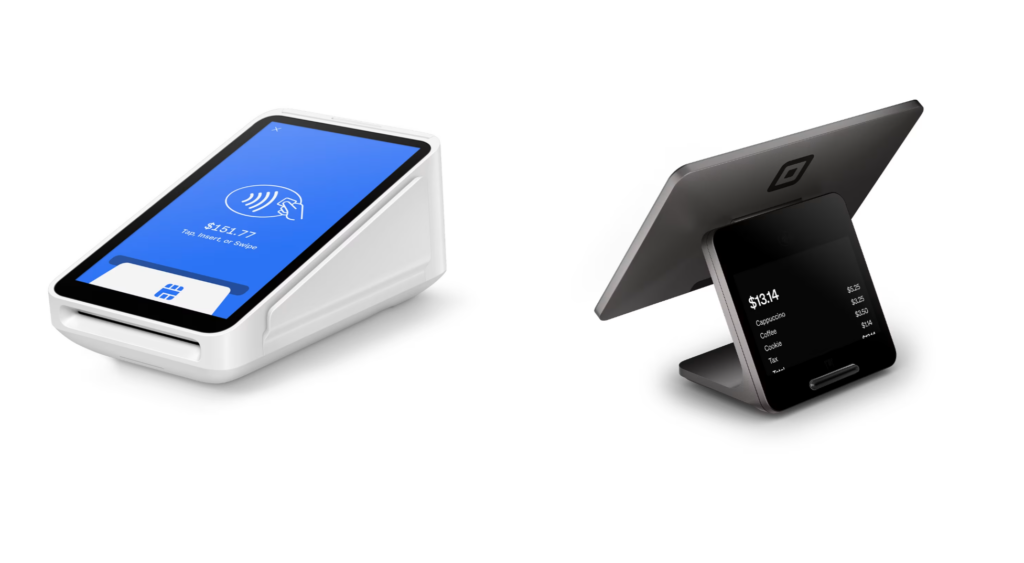
Square for Retail (Squareup) is a general-purpose POS system suitable for small grocery stores. It offers streamlined operations with low upfront costs, along with loyalty programs and employee management tools, making it ideal for independent grocers looking for an easy-to-use, scalable POS system.
Key Features
- Multi-Location Inventory Management: Easily transfer inventory between locations and track stock in real-time across all your stores.
- Quick Setup: Provides simple plug-and-play hardware, making it a good fit for smaller grocery stores or specialty food retailers.
- Payment Flexibility: Accepts all major payment types, including debit, credit, and mobile wallets, ensuring seamless transactions.
- Customer Loyalty Program: Built-in loyalty program that helps grocery stores incentivize repeat customers.
- Integrated Reporting: Offers real-time reporting on sales trends, profit margins, and product performance, helping owners make data-driven decisions.
Pricing
Square offers three primary tiers:
- Free: $0/month per location (2.6% + 15¢ in-person processing).
- Plus: $49/month per location (2.5% + 15¢ in-person processing).
- Premium: $149/month with custom processing rates for high-volume stores.
Pros
- Simple setup with no upfront software cost.
- Works across retail, online, and mobile sales channels.
- Easy to train staff on basic operations.
Cons
- Requires add-ons or workarounds for grocery-specific workflows.
- Limited support for weighted inventory and scale-heavy environments.
- Processing fees can increase the total cost over time.
How to Choose the Best POS System for Your Grocery Store
Grocery stores manage high transaction volumes, variable-weight items, and strict compliance requirements, which generic systems often fail to address. The right POS system should link checkout, inventory, and reporting functions to maintain consistency across all store departments.
- Native Scale and Weighted Item Logic: The POS system should be able to handle variable-weight items like produce, deli products, and meats. Look for POS systems that integrate directly with scales, allowing weight and pricing to be automatically transferred to the transaction.
- Integrated EBT and eWIC Support: The POS system should process EBT/SNAP and eWIC transactions within the same checkout flow. Systems that automatically separate eligible items reduce delays and eliminate the need for cashier intervention.
- Rebate and Supplier Tracking: A grocery POS system should track manufacturer-funded rebates and promotional allowances. This allows stores to recover eligible revenue without relying on manual spreadsheets.
- On-Site Implementation and Support: Look for a provider that offers on-site setup, staff training, and continuous hardware support to reduce downtime and simplify troubleshooting.
- Multi-Store Integration: If you operate multiple locations, the POS system should provide a centralized view of all store data, allowing easy monitoring of sales, inventory, and employee performance across sites.
- Cloud-Based Flexibility: A cloud-based system offers access to real-time data from any device and provides backup in case of system failure. Ensure your POS system can handle both online and offline operations.
Modernize Your Store with a POS System Built for Grocery Operations
The grocery POS systems compared here differ based on store size, product offerings, and operational complexity. Smaller stores may prioritize quick setup and cost-effectiveness, while multi-store operators often require centralized control and detailed reporting.
Independent grocers who need industry-specific functionality and ongoing hardware support from a single provider find a more suitable fit with Osprey POS, delivered by bmc. By addressing key grocery challenges like EBT compliance and weight-based inventory tracking, the system ensures stability for your daily tasks while avoiding the common limitations found in generic retail platforms.
Ready to see how bmc can optimize your grocery store operations?