

Quick Summary
Choose a nonprofit or for-profit model, register the business, and secure funding. Then source inventory, set pricing, and add a POS system before you hire and market. A lean online shop can launch for a few thousand dollars; a storefront runs $20,000 to $150,000.
Introduction
You want to open a thrift store, but the path looks foggy. Licensing, inventory, pricing, staffing: it all feels like a lot to figure out at once.
This guide clears that fog and walks you through every step, from first idea to grand opening, with real 2026 cost ranges along the way. You can start small from your kitchen table or build a full storefront. But whichever route you choose, it will run better on a proper thrift store POS system.
Why Listen To Us?
Plenty of guides cover this topic. This one comes from a team that has equipped independent retailers since 1958.
BMC (Business Machines Company) has spent more than 65 years helping independent stores choose, set up, and run the right point-of-sale systems. Thrift is one of the industries we serve directly, alongside grocery, liquor, and convenience retail. We have seen what helps a secondhand store grow, and what quietly holds one back.
We are independent in how we work. BMC offers solutions from leading providers like NCR, PAR, and TGCS, so the advice here is about what fits your store, not what we are trying to sell.
Is a Thrift Store Worth Starting?
For the right owner, yes.
Secondhand shopping has gone mainstream, and demand keeps climbing. By one industry estimate, roughly 16 to 18% of Americans visit a thrift store at least once a year. Shoppers want value, and many want to keep usable goods out of landfills. A thrift store delivers on both.
The economics are unusual for retail. Your inventory often costs little or nothing, because donations and consignment fill most of your racks. That keeps margins healthy. Well-run thrift stores report net profit margins in the 20 to 40% range, among the highest in retail.
The work is real, though, and worth naming up front. You sort, tag, and price almost constantly, and you have to stay on top of shrink and seasonal swings. But the model rewards operators who stay organized and treat sourcing as a daily habit rather than an afterthought.
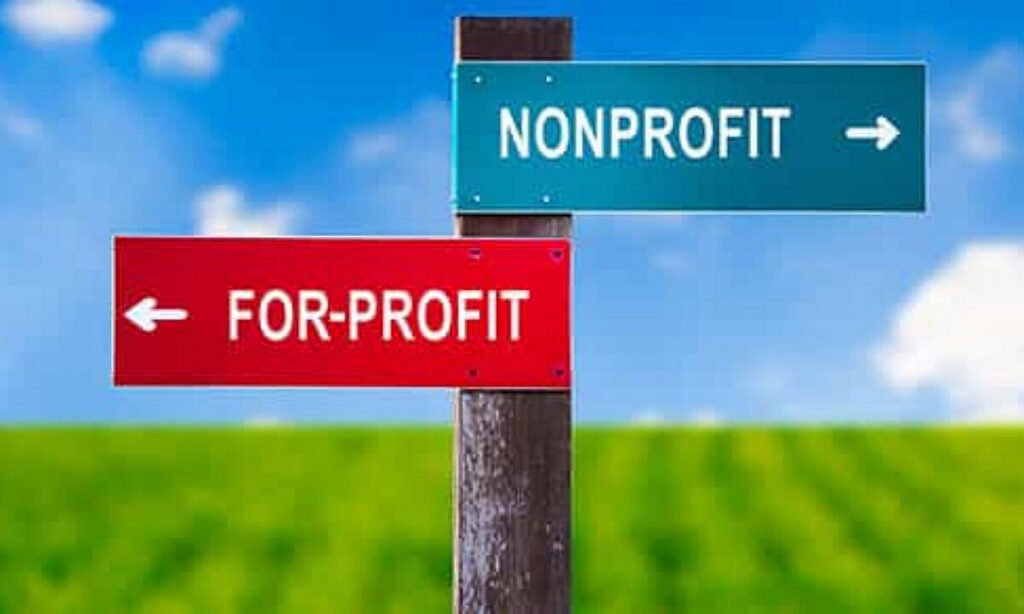
Nonprofit vs. For-Profit Thrift Store
This is the first big fork in the road, and it shapes nearly every decision that follows. The simplest way to frame it is that a nonprofit thrift store funds a mission, while a for-profit thrift store funds an owner.
Pick the one that matches your goal before you spend a dollar.
Nonprofit thrift store
A nonprofit runs on a mission rather than margins. Most of your staff will likely be volunteers, a board guides the bigger decisions, and the profits feed the cause you serve.
You will need 501(c)(3) status to operate this way. It takes some paperwork, but it unlocks tax-exempt donations and opens the door to grants and community support.
For-profit thrift store
A for-profit store runs for growth and income. You will usually rely on paid staff instead of volunteers. You can either reinvest your earnings to improve the store, add locations, or take it as profit.
This model gives you more freedom. You set your own pricing and strategy, and you answer to your customers rather than a board. The tradeoff is that you carry the full financial risk yourself.
Quick comparison:
Factor | Nonprofit | For-profit |
|---|---|---|
Main goal | Fund a mission | Build profit and growth |
Staffing | Mostly volunteers | Paid staff |
Structure | 501(c)(3), board-led | Owner-led |
Funding | Grants, donations | Sales, owner capital |
Tax status | Tax-exempt | Taxable |
How to Start a Thrift Store, Step by Step
Here are the nine steps that take you from an idea to open doors.
1. Pick your niche and model
Start by deciding what you will sell. Clothing, furniture, books, housewares, or a curated mix all work, but a clear niche helps you stand out in a crowded resale market.
Next, lock in your model. Are you nonprofit or for-profit? Will you operate a storefront, online space, or both?
2. Write a business plan
Keep your plan short and useful rather than long and polished.
Cover the basics:
- Your target market
- The startup and monthly costs
- Your pricing approach
- A simple sales forecast
Lenders and grant boards will ask to see it, and it will provide you with a useful reference point.
3. Register your business and get licenses
Handle the legal basics before you sign a lease or buy stock. Exact requirements vary by state and city, so confirm yours locally. Most thrift stores need the same handful of items:
- A registered business entity (LLC, corporation, or nonprofit), which typically costs $50 to $500 to file, depending on your state
- An EIN from the IRS, which is free
- A resale or seller’s permit, which is often free or low-cost
- A local business license, usually $25 to a few hundred dollars
- 501(c)(3) status, if you are going the nonprofit route
4. Secure funding
Add up your startup costs first, then match that number to a funding source. A storefront is a real investment, with most owners needing somewhere between $20,000 and $150,000 to open. Common ways to cover it include:
- Personal savings, the most common starting point
- Small business loans or an SBA-backed loan
- Grants and donor campaigns, which are mainly open to nonprofits
- Crowdfunding or a community donation drive
5. Find a location or go online
For a storefront, location does a lot of the marketing for you, so look for visibility, easy parking, and steady foot traffic. Most thrift stores need 1,500 to 4,000 square feet to display enough variety, and rent often lands somewhere around $1,500 to $4,500 a month depending on your market.
Want lower risk to start? Launch online instead with an existing ecommerce platform or your own domain and add a physical store later, once your sales and your sourcing both prove out.
6. Source your inventory
Sourcing is the daily engine of a thrift store, and strong sourcing is what keeps your racks full, fresh, and profitable. Build several channels rather than leaning on one:
- Community donations: free, but can take time to build up a consistent pipeline
- Consignment: you pay the seller 40 to 60% only after an item sells
- Estate sales and auctions: often run $500 to $5,000 per lot
- Bulk textile bales and liquidation pallets: commonly $0.50 to $2 per pound
- New goods: can be used selectively to fill gaps in your selection
7. Set up pricing, tagging, and your POS system
This step quietly decides your margins, so give it real attention. Price by category and condition, and tag every item with a system your whole team can follow. Then choose your point-of-sale software. A basic cash register will not keep up with thrift workflows.
Thrift retail has needs that generic systems miss. A purpose-built thrift store POS system handles the parts that matter most:
- Fast tagging and production workflows
- Multi-store inventory and clear reporting
- Loyalty programs for repeat donors and buyers
- Donation tracking, which nonprofits especially need
- Loss prevention and security controls to protect thin margins
Budget realistically here. POS software generally runs $0 to $200 a month, while hardware ranges from a $49 mobile card reader up to a $1,000 to $5,000 full retail kit with a scanner, drawer, and printer. Card processing adds another 2.3 to 4% per sale.
Getting this right early saves you a painful switch later, and our Thrift Store POS Buyer’s Guide compares the options in detail.
8. Recruit and train your team
Decide who will run the floor: volunteers, paid staff, or a mix, matched to your model and budget. Whoever it is, train them on the POS from day one, including tagging, pricing, and returns.
Clear systems and clear training are what prevent the small, repeated mistakes that erode profit.
9. Market your store and open
Build some buzz before opening day rather than after it. Lean on local social media, an email list, and partnerships with nearby businesses to spread the word. Then plan a real grand opening with a launch promotion, and keep the momentum going afterward with steady, consistent posting.
How Much Does It Cost to Start a Thrift Store?
Your costs depend heavily on format. An online store can launch cheaply, while a full storefront is a serious investment. Most storefront owners spend between $20,000 and $150,000 to open, with monthly operating costs of roughly $5,000 to $15,000 after that.
The table below shows where the money tends to go. Treat these as 2026 planning estimates rather than quotes, since they shift with your location and size.
Cost item | Online / from home | Physical storefront |
|---|---|---|
Business registration and permits | $50-$500 | $50-$500 |
Lease | $0 | $1,500-$4,500/month |
Fixtures, racks, and shelving | $200-$2,000 | $3,000-$15,000 |
POS hardware and software | $0-$1,000 | $1,000-$5,000 + $0-$200/month |
Opening inventory | Low (donations/consignment) | $2,000-$10,000 |
Marketing and launch | $200-$2,000 | $1,000-$5,000 |
Staffing (first months) | $0 (solo) | $3,000-$15,000/month |
A lean online shop often launches for a few hundred to a few thousand dollars, mostly because you skip rent and paid staff. A storefront sits at the higher end once you add a lease, fixtures, and opening stock.
How to Start a Thrift Store With No Money
You can start small with very little capital, as long as you avoid the high upfront cost of inventory and rent. The trick is to choose a model that delays or removes those expenses.
A few low-cost paths work well:
- Sell online from home first, so you skip a lease entirely
- Use a consignment model, where you only pay sellers after an item sells
- Run as a nonprofit and pursue grants, donations, and volunteer help
- Launch a crowdfunding or community donation drive to cover early costs
- Start with one category, then reinvest your profits into more stock
Start lean and grow with your sales.

How to Start an Online Thrift Store or Run One From Home
Online thrift is the lowest-risk way in. You skip rent, you reach buyers well beyond your town, and you can run the whole thing from a spare room to start.
1. Choose your platform
You can sell on an existing marketplace or build your own site. Marketplaces give you instant traffic but take a cut and limit your branding. Your own store gives you more control and better margins, but you have to drive the traffic yourself.
2. Source and photograph your stock
Use the same sourcing channels as a storefront would: donations, consignment, estate lots, and bales. Then shoot clean, well-lit photos. Online buyers judge entirely on images. Good photography is the single biggest driver of online sales.
3. Handle shipping and fulfillment
Set clear, simple shipping rates so buyers know what to expect. Pack items well to cut down on damage and returns, and track every order in one place so nothing slips. A connected POS or inventory tool keeps this manageable as volume grows.
4. Grow into a storefront
A successful online store can fund your first physical location. Better still, your online sales data shows you which categories sell and where your buyers are, which takes a lot of the guesswork out of choosing a space. Plenty of owners take exactly this path.
Common Mistakes to Avoid
A few early errors quietly drain profit from new thrift stores. Watch for these:
- Underpricing your best inventory and leaving money on the table
- Running with no real inventory system to track what you have
- Ignoring shrink and theft until they eat your margins
- Leasing far more space than you actually need
- Skipping staff training on the POS, which leads to costly mistakes
Avoid these, and you protect your margins, which is the whole game in resale.
When to Upgrade Your Thrift Store Systems
Your first setup can be simple. But growth changes what you need, and the signs are usually easy to spot:
- You open a second or third location
- Reporting across stores gets messy and slow
- Tagging and production can no longer keep pace with volume
- Shrink starts cutting into your margins
That is the moment to invest in stronger tools. Multi-store operators need real visibility across every location, and a purpose-built thrift store POS system, like the one offered by BMC, is what gives them that.
Start Your Thrift Store the Right Way
Opening a thrift store rewards owners who plan well and build on solid systems. Get the early decisions right, your model, your sourcing, and your POS, and the day-to-day runs far smoother.
Start lean if you need to, then scale as your sales grow. When the time comes to choose a system that can keep pace, look for one specialized in resale rather than general retail.
That is where BMC comes in. Our team has helped independent retailers grow since 1958, and our thrift store POS is built around how secondhand stores actually work.
Book a demo today to see how a BMC POS system can support your thrift store from day one.
Frequently Asked Questions
Do thrift stores make money?
Yes. Low inventory costs and steady demand make thrift a profitable model when it is run well. Well-managed stores report net margins of 20 to 40%, with pricing discipline and shrink control deciding where you land in that range.
How profitable is a thrift store?
Profitability varies by model and location, but the ceiling is high for retail. For-profit stores chase margin and growth, while nonprofits route their surplus into a mission. In both cases, donated inventory at near-zero cost is what drives the strong margins.
Do you need a license to start a thrift store?
Usually, yes. Most states require a business license and a resale or seller’s permit, and the specifics vary by state and city, so confirm yours locally. Nonprofits also pursue 501(c)(3) status to accept tax-exempt donations.
What is the best POS system for a thrift store?
Look for tagging, multi-store reporting, donation tracking, and loss prevention built in, since generic retail systems tend to miss those thrift-specific workflows. Our Thrift Store POS Buyer’s Guide compares the leading options side by side.