

Quick Summary
NCR Counterpoint is a mature retail management system built for high-SKU specialty stores. Liquor and wine operators get real value from its inventory depth, but thrift and pet retailers tend to fight the model.
The pros and cons at a glance:
| Pros | Cons |
|---|---|
| Inventory depth for huge catalogs | Quote-only pricing, no public rates |
| Strong vendor purchasing automation | Heavy implementation and training load |
| Reporting you can build on | Aging Windows and SQL foundation |
| Proven, stable, decades of use | Gateway narrows your processor choices |
| Wide ecommerce and accounting integrations | Service quality depends on your reseller |
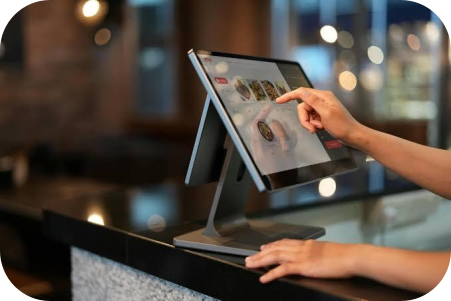
Overview of NCR Counterpoint
NCR Counterpoint is a retail management platform for specialty stores with big catalogs. It handles point-of-sale, inventory, purchasing, customer records, and reporting in a single system. It is sold entirely through an assigned partner network, a detail that shapes most of what follows.
Counterpoint markets to retailers doing $500,000 or more per year, typically with thousands of SKUs and multiple locations. Garden centers, wine shops, sporting goods stores, and apparel retailers make up much of its installed base.
It is a capable system, and plenty of operators have run it happily for years. But it was designed around a particular kind of store: one that buys replenishable goods from vendors on purchase orders. If your liquor store matches that description, the fit is good. If your inventory arrives by donation, the fit gets awkward fast.
Key Features
Counterpoint earns its reputation on depth rather than polish. These are the areas where that shows.
Inventory Built for Big Catalogs
- Catalog scale: tens of thousands of SKUs across multiple stores without strain
- Stock visibility: serialized tracking and cross-store lookups from any register
- Item attributes: sizes, colors, and variants for apparel-style catalogs
For a wine shop tracking every vintage and varietal, this depth is the whole point.
Purchasing and Vendor Management
- Automated reordering: suggests quantities based on minimum and maximum levels
- Full purchase cycle: orders, receiving, and vendor cost records in one place
- Distributor data: feeds into stock records without manual re-entry
This is Counterpoint’s strongest muscle. It was built for stores that constantly reorder from vendors.
Reporting You Can Build On
- Crystal Reports: ships with the system alongside a library of built-in analysis reports
- Open SQL database: query it directly, so custom reporting is genuinely possible
The tradeoff is that real reporting depth often needs someone technical. Owners rarely build these themselves.
Customer and Loyalty Tools
- Customer records: purchase history, loyalty points, and gift cards built in
- Email marketing: targets promotions using customer purchase data
- Flexible pricing: contract and tiered rates for wholesale or member accounts
Ecommerce and Integrations
- Platform connections: Shopify, WooCommerce, QuickBooks, and Sage, usually as paid modules
- Inventory sync: keeps store and web catalog stock aligned
Worth knowing: several of these integrations are separate purchases, not core features.
Pricing
NCR does not publish Counterpoint pricing. Each number is a quote from a partner, shaped by your lane count, modules, and the level of configuration you need. The figures below are third-party pricing metrics, so use them to frame a conversation, not to budget against.
Two Licensing Models
- On-premise perpetual license: roughly $1,190 to $1,500 per license, paid upfront
- Cloud-hosted subscription: around $149 per license per month, with hosting and updates included
Add-on modules for ecommerce, advanced CRM, and analytics carry their own costs on top.
Implementation and Training
This is the line item that surprises people. Reported implementation costs run about $3,000 to $5,000 for a small retailer and $10,000 to $20,000 for larger, multi-store setups. Customization typically starts around $1,000 and climbs from there.
Counterpoint is not a system you unbox and switch on. Module setup is detailed, and reviewers regularly describe the configuration process as tedious.
Ongoing Maintenance
Annual maintenance commonly lands around 10% to 20% of your software cost. Support subscriptions add a monthly fee on top. Neither is optional if you want updates and a phone number to call.
Processing
Counterpoint is not welded to a single processor the way some all-in-one systems are. The gateway does support a list of processors. But it is a list, not an open market, and NCR steers customers toward its own merchant services. Several operators we talk to describe their Counterpoint processing costs as the reason they started shopping.
What It Adds Up To
Picture a two-store liquor operation running four lanes.
Four perpetual licenses land somewhere near $4,800 upfront. Implementation adds $5,000 or more for a multi-store build. Annual maintenance runs several hundred to a few thousand a year. Hardware and payment terminals sit on top of that, and processing takes its cut of every sale.
Pros
Counterpoint has earned its long-running customer base. These are the genuine strengths:
- Serious inventory depth: tens of thousands of SKUs across stores without strain
- Purchasing automation: reorder logic and vendor management that actually save labor
- Open database: SQL access and Crystal Reports mean your data is not trapped
- Proven stability: decades in the field and a large installed base
- Strong specialty fit: excellent for wine, liquor, garden, and sporting goods catalogs
- Real integrations: ecommerce and accounting connections that work in production
For a high-SKU store with a vendor-driven supply chain, this is a lot of capability.
Cons
The same design choices that make Counterpoint powerful also make it demanding. Here is where owners feel it:
- Opaque pricing: nothing published, so comparing quotes takes real effort
- Slow set-ip: implementation and configuration are heavy projects
- Dated foundation: Windows and SQL Server architecture shows its age, and SQL Express installs hit database size limits
- Reseller roulette: NCR routes you to your partner, so your experience is entirely their experience
- Narrow processor list: more flexibility than a locked box, less than an open market
None of this makes Counterpoint a bad system. It makes it a system with a specific shape.
Who Should Choose NCR Counterpoint
Counterpoint fits a recognizable profile. You are probably in it if this sounds like you:
- You run a wine, liquor, or beverage store with a deep and constantly changing catalog
- You buy from many vendors on purchase orders and want reorder automation
- You operate several locations and need shared inventory visibility
- You have someone technical who can build reports and manage a SQL database
- You want software you own rather than a monthly subscription
- You already have a partner you trust and a long relationship with them
If you see your business in this list, Counterpoint remains a strong option in 2026.
Who Shouldn’t Choose NCR Counterpoint
Counterpoint assumes a store that buys goods from vendors and resells them. Plenty of specialty retail does not work that way. Reconsider if this is you:
- You run a thrift store where inventory arrives by donation, not purchase order
- You manage production and tagging workflows rather than replenishment cycles
- You run a pet store built on repeat purchases, frequent-buyer programs, and services
- You want pricing you can see before you commit to a discovery process
- You need to shop processing rates freely as your volume grows
- You want a local partner you chose, not one you were assigned
For these operators, Counterpoint asks you to bend your operation around the software.
What to Choose Instead
If Counterpoint does not match your store, here is what to look for instead.
Donation Intake, Not Purchase Orders
Thrift inventory has no vendor, no reorder point, and often no cost basis. A system built around purchasing logic rarely makes sense.
- Donation tracking: intake recorded without forcing a vendor or cost record
- Production workflows: sorting, pricing, and tagging treated as core steps
- Color-tag rotation: automatic markdown schedules driven by tag date
Our thrift store POS handles these natively rather than through custom modules. Non-profit operators especially should not pay for a supply chain they do not have.
Repeat-Purchase Loyalty for Pet Retail
Pet stores live on frequency. Customers return every few weeks for the same food, and a loyalty card is often what keeps them from ordering online instead.
- Frequent-buyer tracking: punch-card programs that run automatically at the register
- House accounts: regulars who run a tab and settle monthly
- Repeat-order prompting: flag customers who are due for their usual
A pet store POS should do all of this without custom work. You will not win on price against a big box store, so your loyalty tools have to be sharper than theirs.
Inventory That Matches How You Buy
Liquor operators break cases into bottles and six-packs. Rebate windows are where your real margin hides, and missing one hurts.
- Case and bottle costing: both tracked natively, not through workarounds
- Distributor IDs: vendor item codes mapped cleanly to your SKUs
- Supplier program tracking: rebate deadlines and volume tiers visible before they lapse
After a deal is done, your retail inventory reporting should show what actually paid off. Counterpoint handles catalog scale well, but scale and workflow fit are different problems.
A Partner You Picked
When NCR routes you to your assigned partner, support quality becomes a matter of luck. Some Counterpoint resellers are excellent. Some are not, and switching is painful.
- You choose the provider: real flexibility and negotiating power matter
- In-person service: dedicated support when a lane goes down
- A named contact: someone who has actually walked your store
There is a real difference between a support queue and someone who knows your setup.
The BMC Perspective
We should be upfront. BMC has sold and serviced POS for independent retailers since 1958, and we compete with Counterpoint in thrift, liquor, and pet stores. Weigh this section accordingly.
Here is where we land. If donation intake, rebate deadlines, or frequent-buyer programs are how your store makes money, they belong in the system natively. Paying for custom modules to bolt them on means paying twice for something that should have come in the box. Processing should be yours to shop, not your vendor’s to assign. And when a lane goes down mid-shift, you deserve someone who can show up, not a case number.
None of that makes Counterpoint a bad system. We would not tell a wine retailer running 20,000 SKUs to tear it out. But if you are weighing options, request a demo today and see what a platform built around your workflow can do.
FAQ
Is NCR Counterpoint being discontinued?
No. It is actively developed and now sits under the NCR Voyix brand. Recent releases have focused on payments and interface updates, with version 8.6.5 required for a 2026 gateway migration.
How much does NCR Counterpoint cost?
There is no published price. On-premise licenses reportedly start near $1,190 each, cloud licenses around $149 per month, with implementation adding $3,000 to $20,000 depending on complexity. Every figure comes from a partner quote.
Can you switch payment processors on NCR Counterpoint?
To a degree. The gateway supports a defined list of processors, so you have more room than with a fully locked system, but less than with a payments-agnostic platform. NCR also promotes its own merchant services.
Is NCR Counterpoint good for thrift stores?
It can be made to work, but the model is a poor match. Counterpoint is built around vendor purchasing and replenishable stock. Thrift runs on donations, production workflows, and one-of-a-kind items.